Greenhouses for Sale in Knoxville: Year Round Growing Structures Delivered and Built
Extend Your Growing Season in East Tennessee with a Backyard Greenhouse. If you have ever lost a flat of tomato starts to a late April frost, or watched your garden wither in the first October cold snap, you already know the frustration. Knoxville sits in USDA Hardiness Zone 7a/7b, which means our natural growing season runs roughly from mid April to late October. That is a solid six months, but it leaves half the year on the table.
A greenhouse changes everything. It gives you a controlled environment where you can start seeds weeks before the last frost, extend your harvest deep into fall, and even grow year round with the right setup. At Foothills Custom Outdoors, we help East Tennessee gardeners find, build, and install greenhouses that actually perform in our climate. We are Nick and Sam, and we know that what works in Colorado or the Pacific Northwest does not always work here. Our summers are brutally hot and humid. Our winters bring occasional hard freezes. And our spring weather can swing 35 degrees in a single day.
Shop by Type
Polycarbonate Kits
The most popular choice for East Tennessee: durable, insulating, and hail resistant.
Glass Greenhouses
Classic clarity and beauty for the serious home gardener.
Cedar Frame Structures
Natural rot resistance and a warm, rustic aesthetic that blends into wooded lots.
Walk In and Hobby
Compact, affordable structures perfect for beginners and smaller yards.
Commercial and Large Scale
Professional grade systems for serious growers and small farm operations.
Cedar-framed greenhouses, cold frames, and potting tables, set up and ready to plant
Extend your growing season and protect your plants year-round with our cedar-framed greenhouses, cold frames, and potting tables. Built from naturally rot-resistant cedar with durable polycarbonate panels, they are made to hold up outdoors while giving your garden a dedicated home. Foothills Custom Outdoors delivers and professionally installs each greenhouse around Knoxville and East Tennessee, so it is set up properly and ready to plant. Every order ships free and is backed by a 5-year warranty.
From $3,499
5-Star
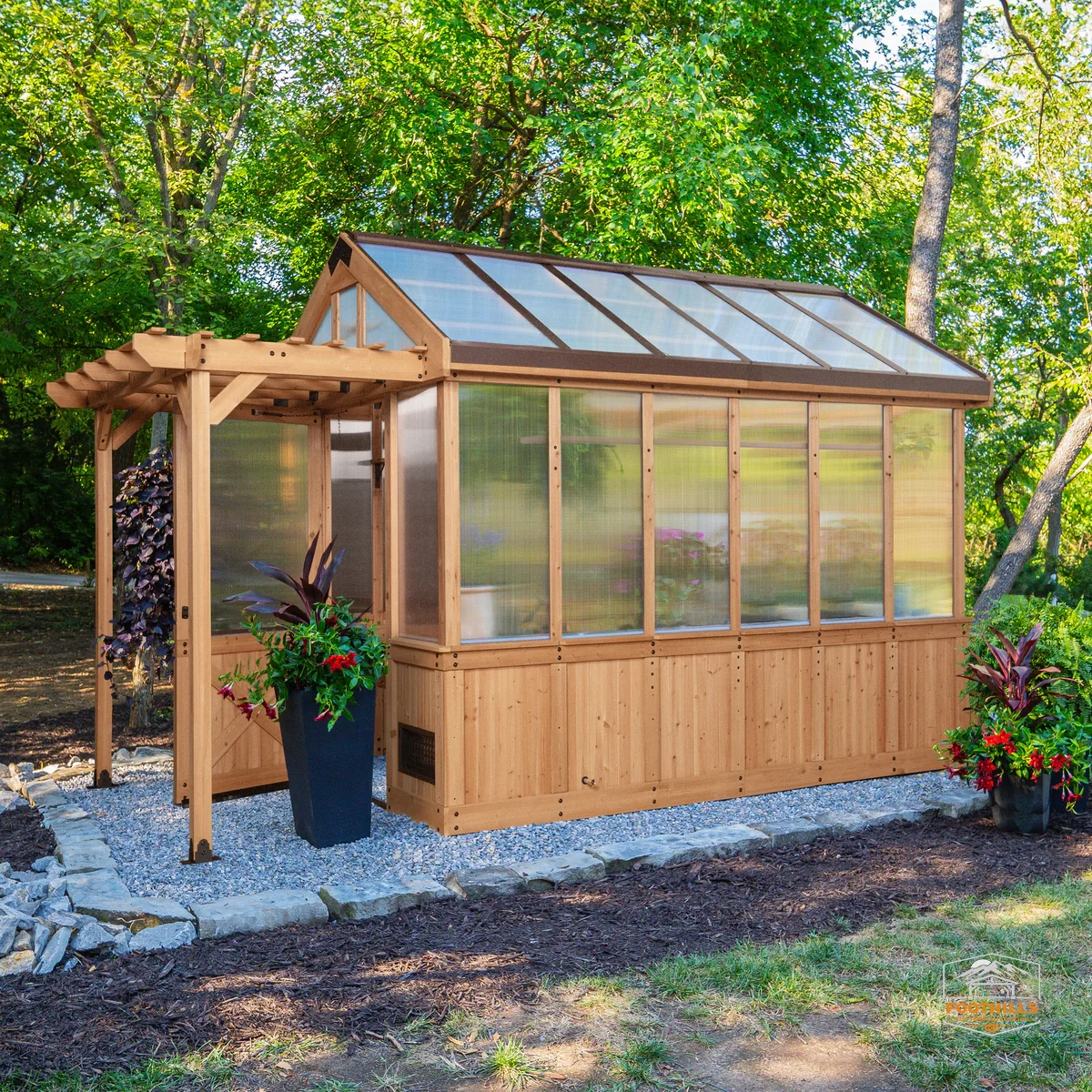
11x7 Bellerose Greenhouse
A spacious walk-in cedar greenhouse with 83 sq ft, 4-wall polycarbonate panels, a workstation, foldable shelves, two vent windows, an exhaust fan, and an entry pergola.
- Weather-Tested & Proven
- 5 Year Warranty
- Professional Installation
- Free Shipping
From $3,499
5-Star
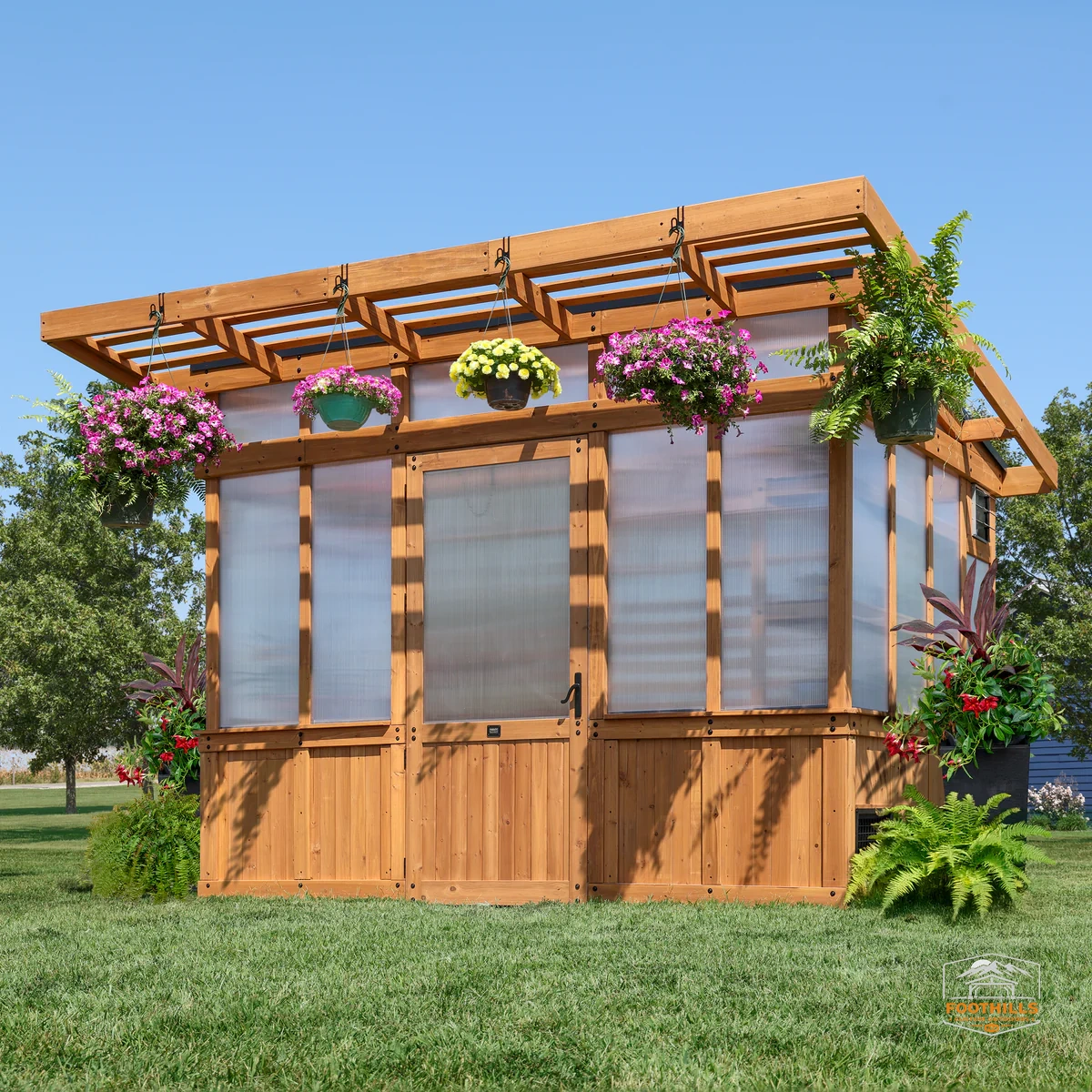
11x7 Poppy Greenhouse
A cedar walk-in greenhouse with 78 sq ft, 4-wall polycarbonate panels, fixed shelves and a 4-tiered rack, two vent windows, an exhaust fan, and side and front pergolas.
- Weather-Tested & Proven
- 5 Year Warranty
- Professional Installation
- Free Shipping
From $2,999
5-Star
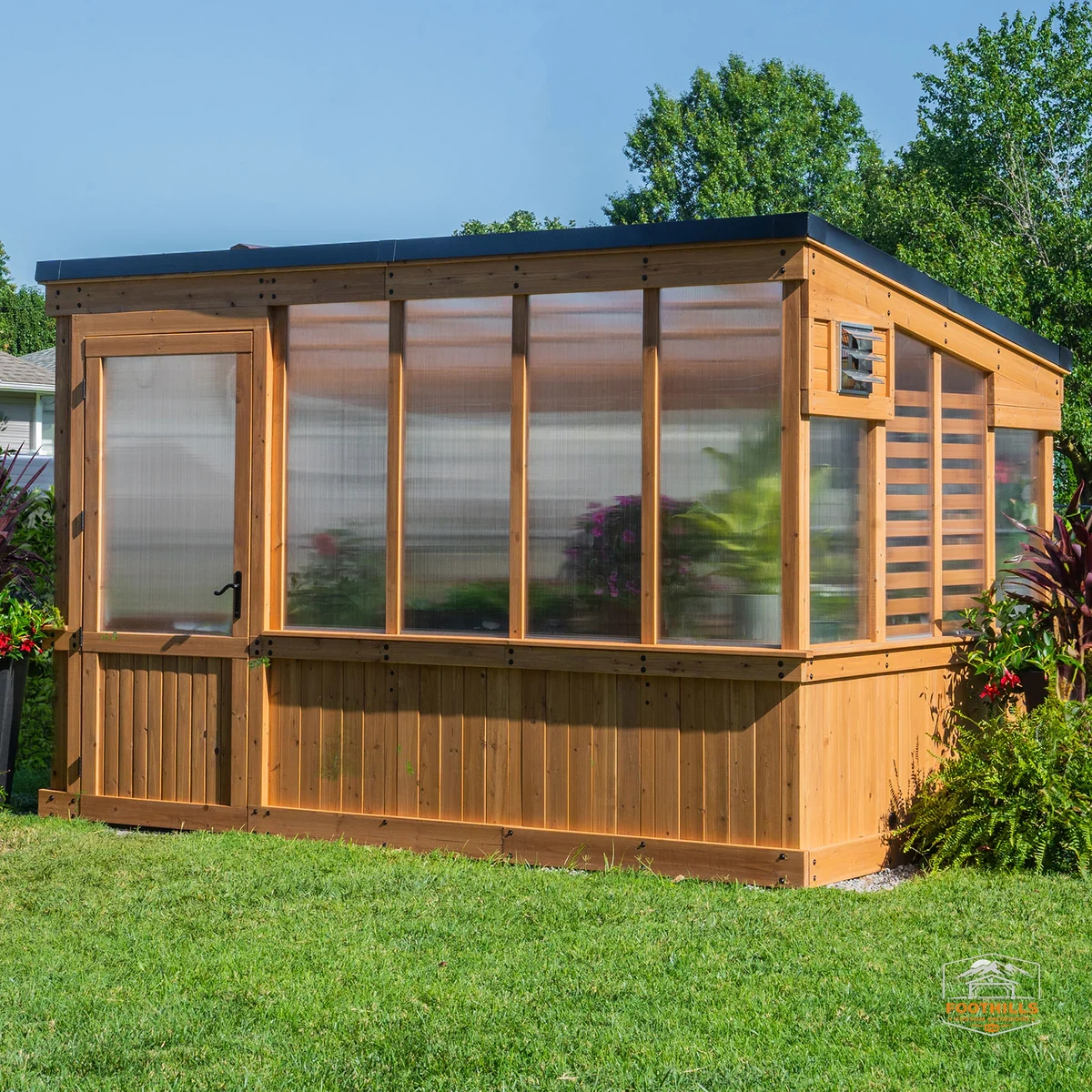
12x7 Zalie Greenhouse
A modern cedar greenhouse with 86 sq ft, 4-wall polycarbonate panels, a workstation with foldable and fixed shelves, two vent windows, an exhaust fan, and built-in power.
- Weather-Tested & Proven
- 5 Year Warranty
- Professional Installation
- Free Shipping
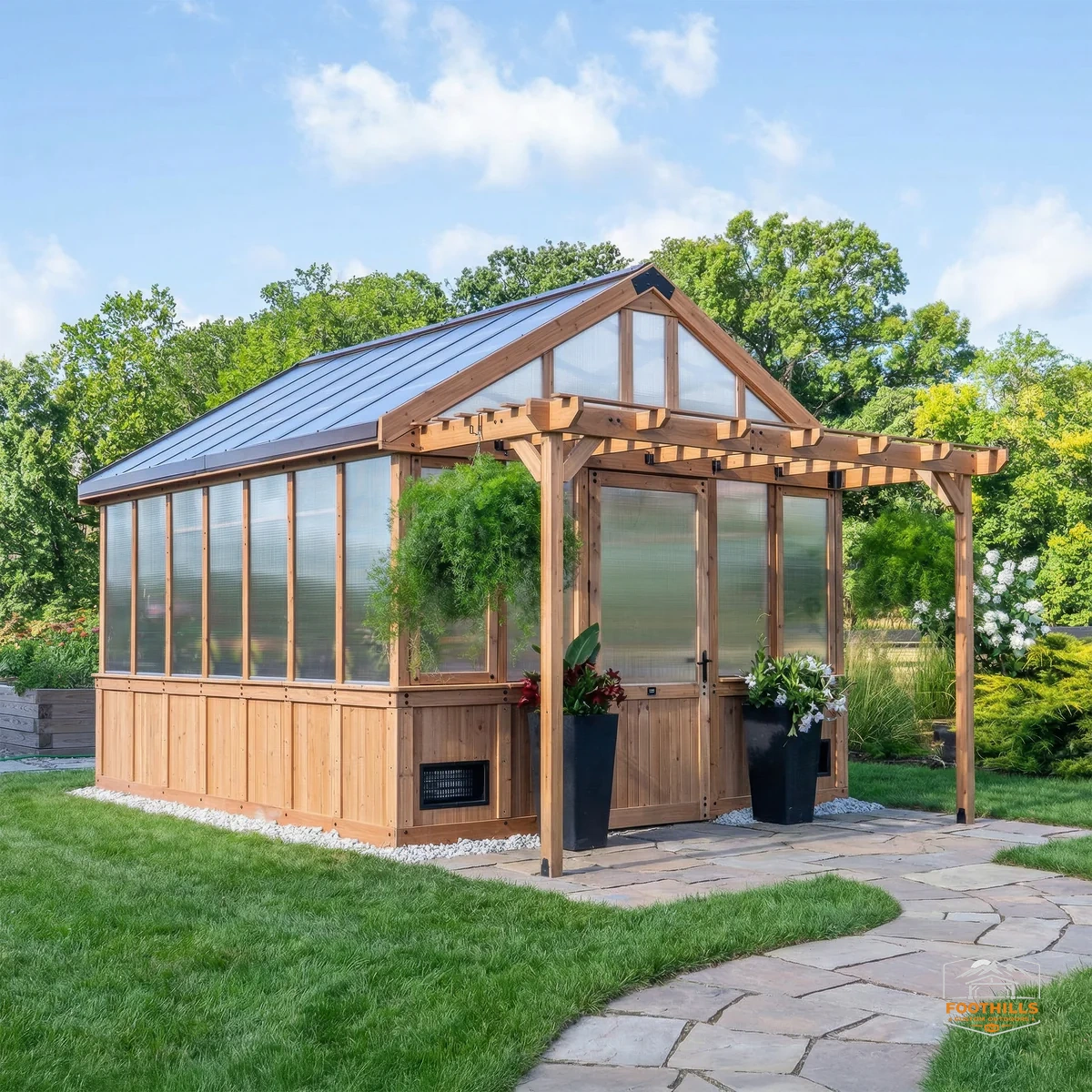
From $5,799
5-Star
13x11 Bellerose XL Greenhouse
A large walk-in cedar greenhouse with 143 sq ft, 4-wall polycarbonate panels, a workstation, four vent windows, an exhaust fan, an entry pergola, and built-in power.
- Weather-Tested & Proven
- 5 Year Warranty
- Professional Installation
- Free Shipping
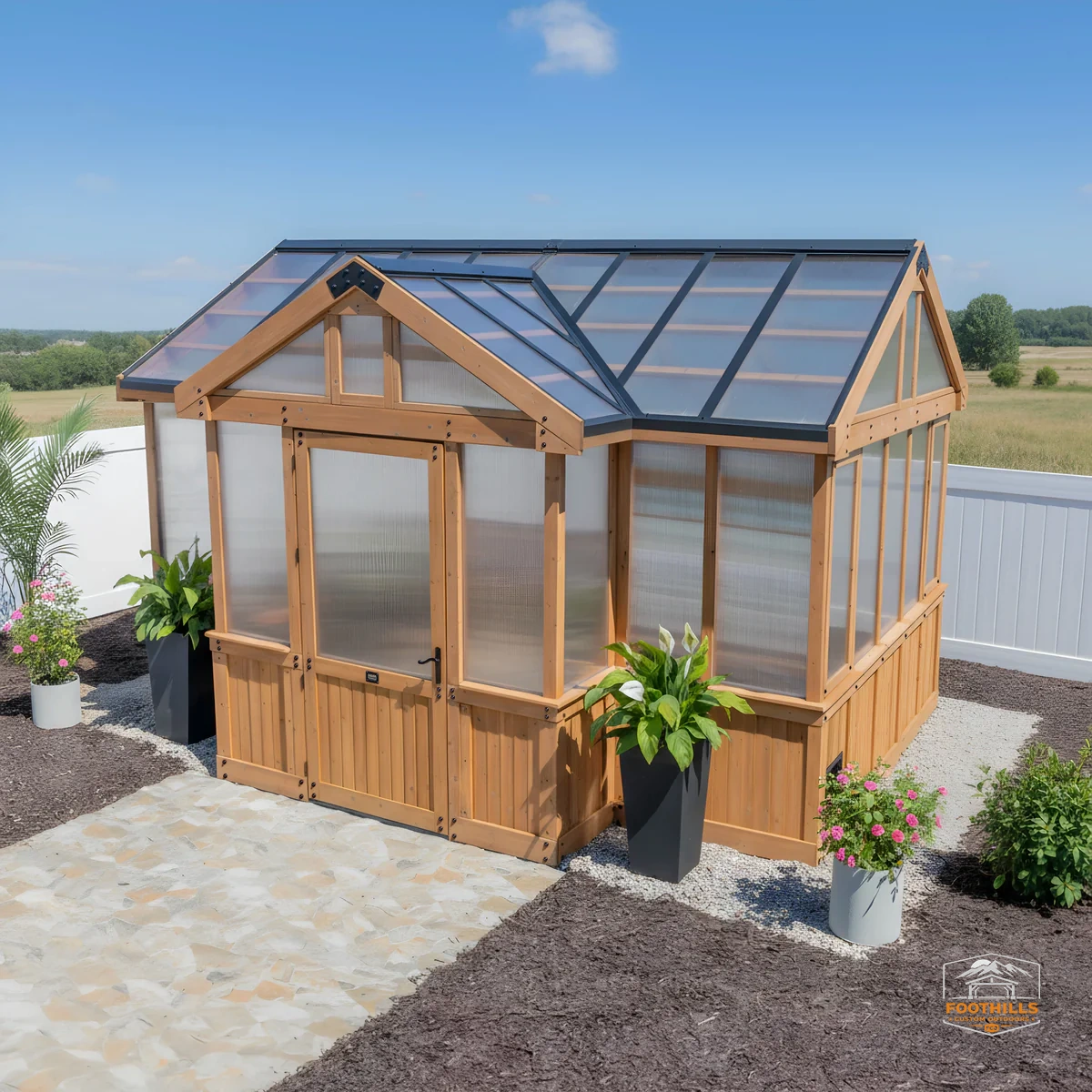
From $5,999
5-Star
14.5x12 Savannah Greenhouse
A chalet-style cedar greenhouse with 161 sq ft, 4-wall polycarbonate panels, a workstation, four vent windows, two exhaust fans, a built-in stainless sink, and built-in power.
- Weather-Tested & Proven
- 5 Year Warranty
- Professional Installation
- Free Shipping
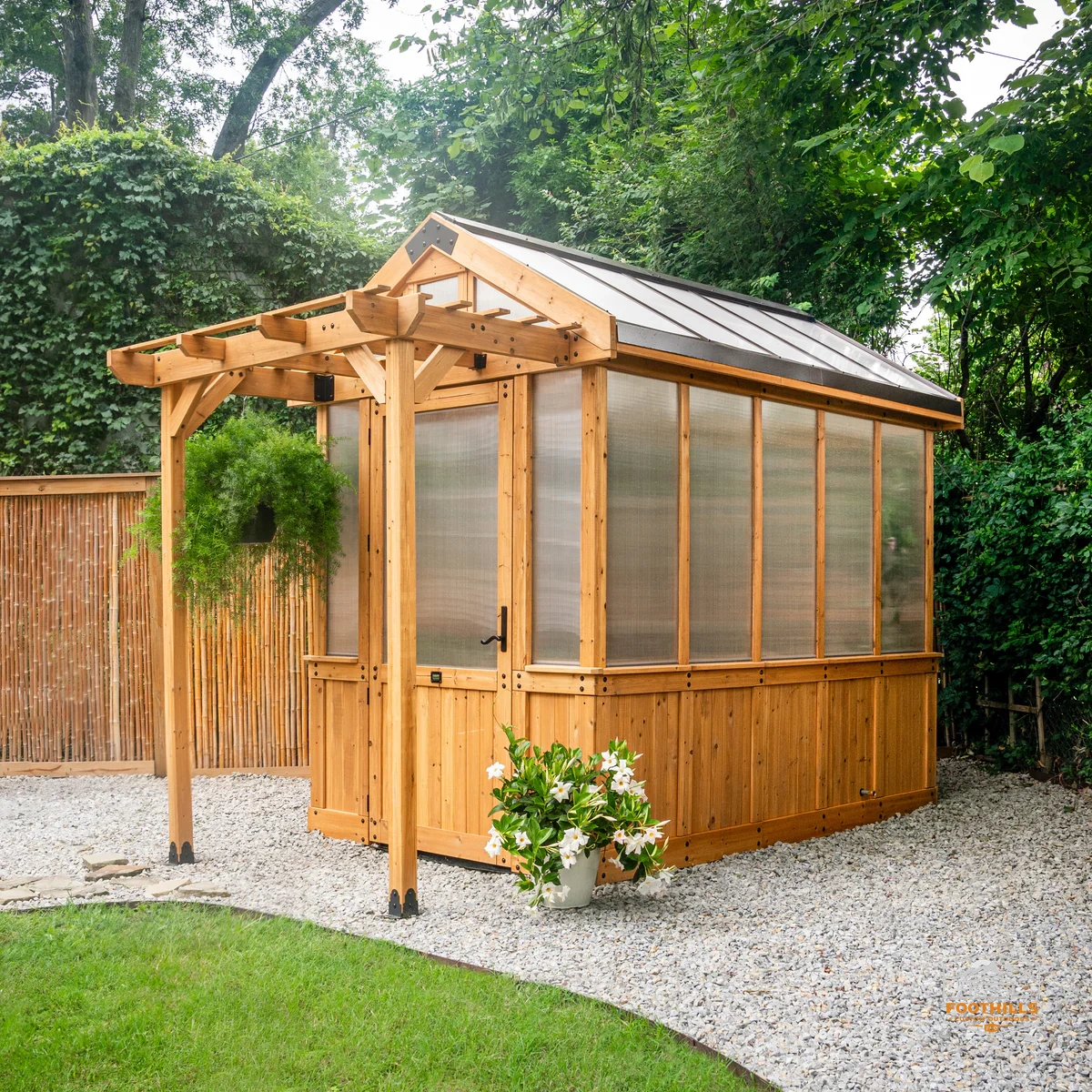
From $2,799
5-Star
9x6 Bellerose Greenhouse
A walk-in cedar greenhouse with 54 sq ft, 4-wall polycarbonate panels, a workstation, a vent window, an exhaust fan, four plant hooks, an entry pergola, and built-in power.
- Weather-Tested & Proven
- 5 Year Warranty
- Professional Installation
- Free Shipping
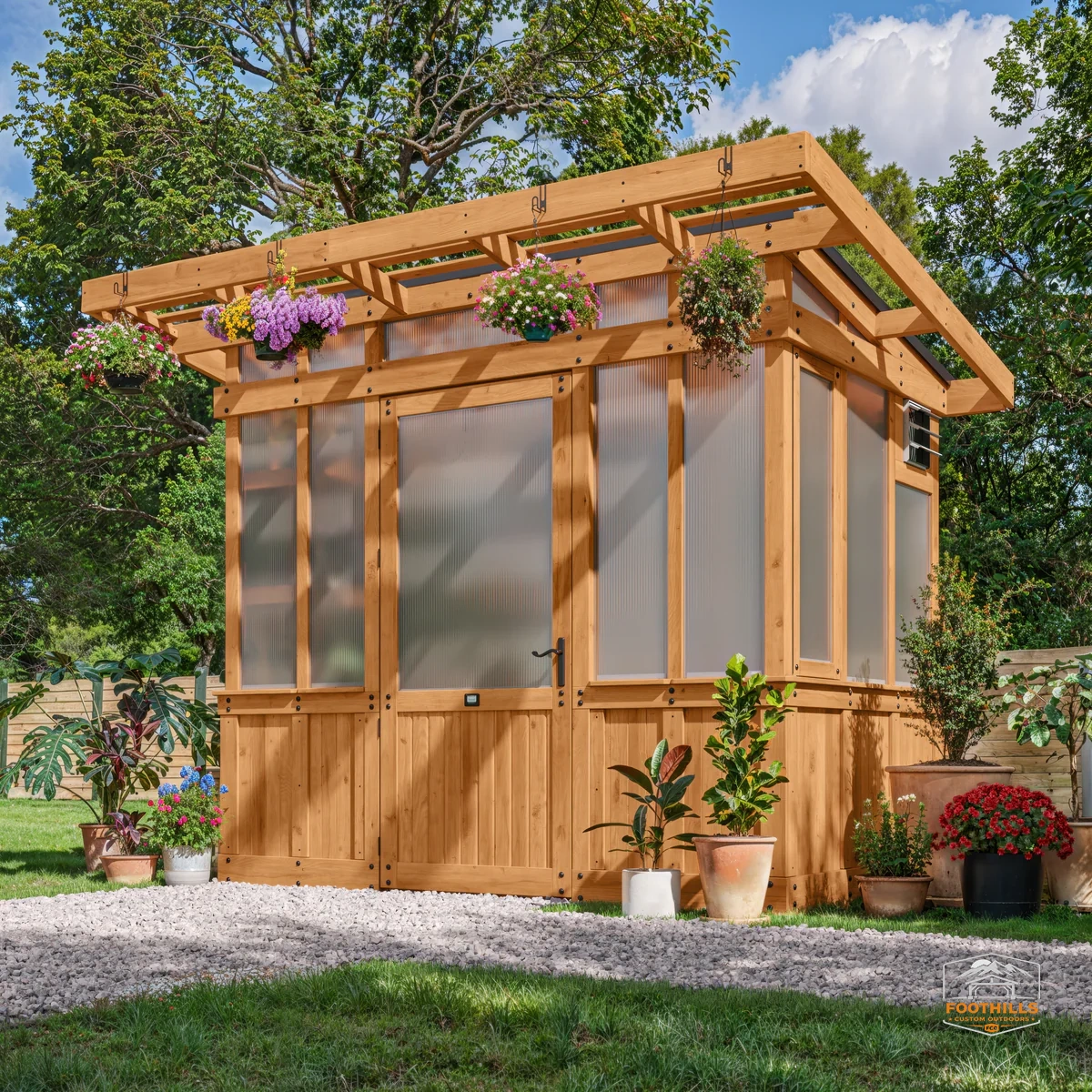
From $2,799
5-Star
9x6 Poppy Greenhouse
A compact cedar greenhouse with 50 sq ft, 4-wall polycarbonate panels, fixed shelves and a 4-tiered rack, a vent window, an exhaust fan, side and front pergolas, and built-in power.
- Weather-Tested & Proven
- 5 Year Warranty
- Professional Installation
- Free Shipping
From $3,299
5-Star
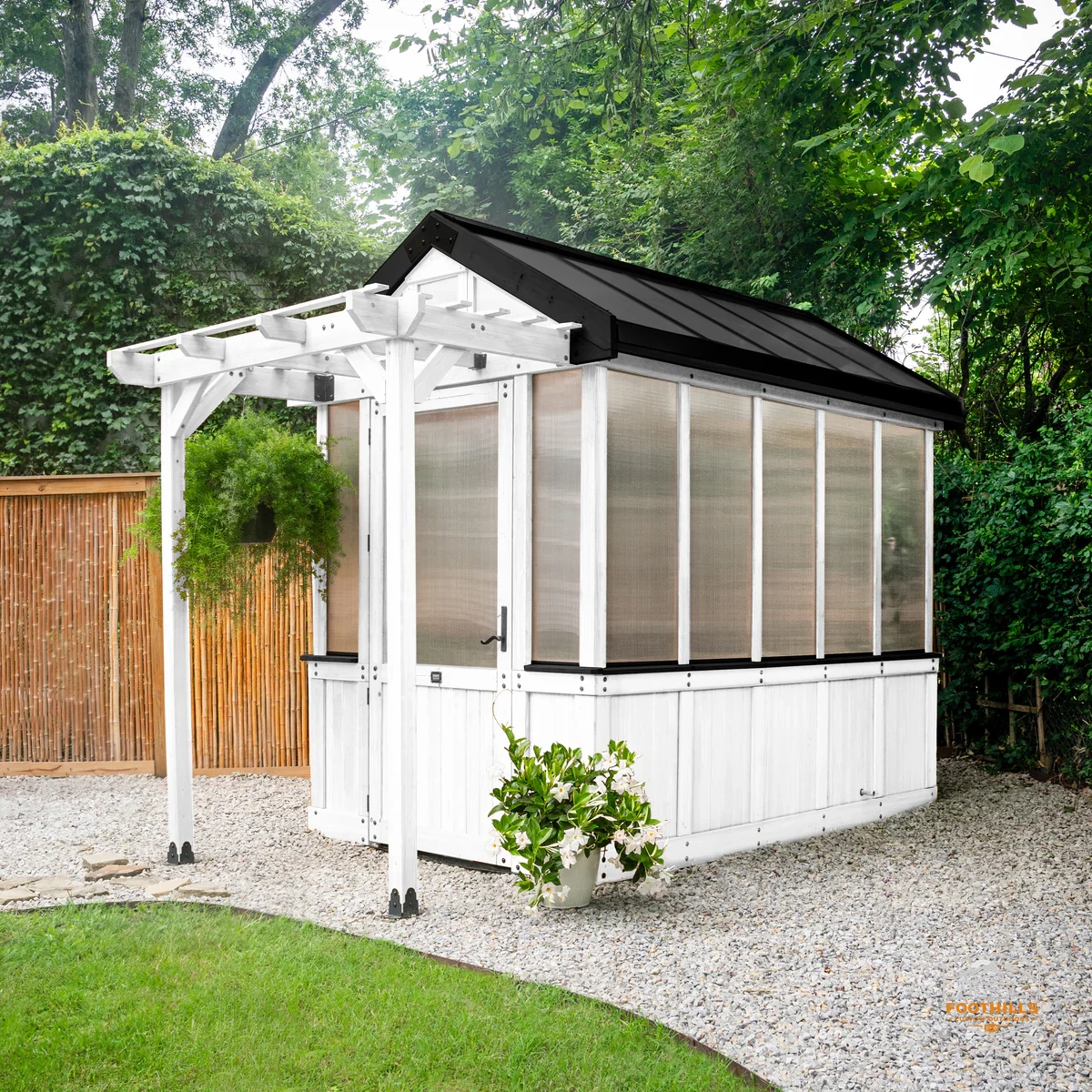
9x6 White Bellerose Greenhouse
A walk-in cedar greenhouse in a crisp white finish with 54 sq ft, 4-wall polycarbonate panels, a workstation, a vent window, an exhaust fan, an entry pergola, and built-in power.
- Weather-Tested & Proven
- 5 Year Warranty
- Professional Installation
- Free Shipping
From $2,299
5-Star
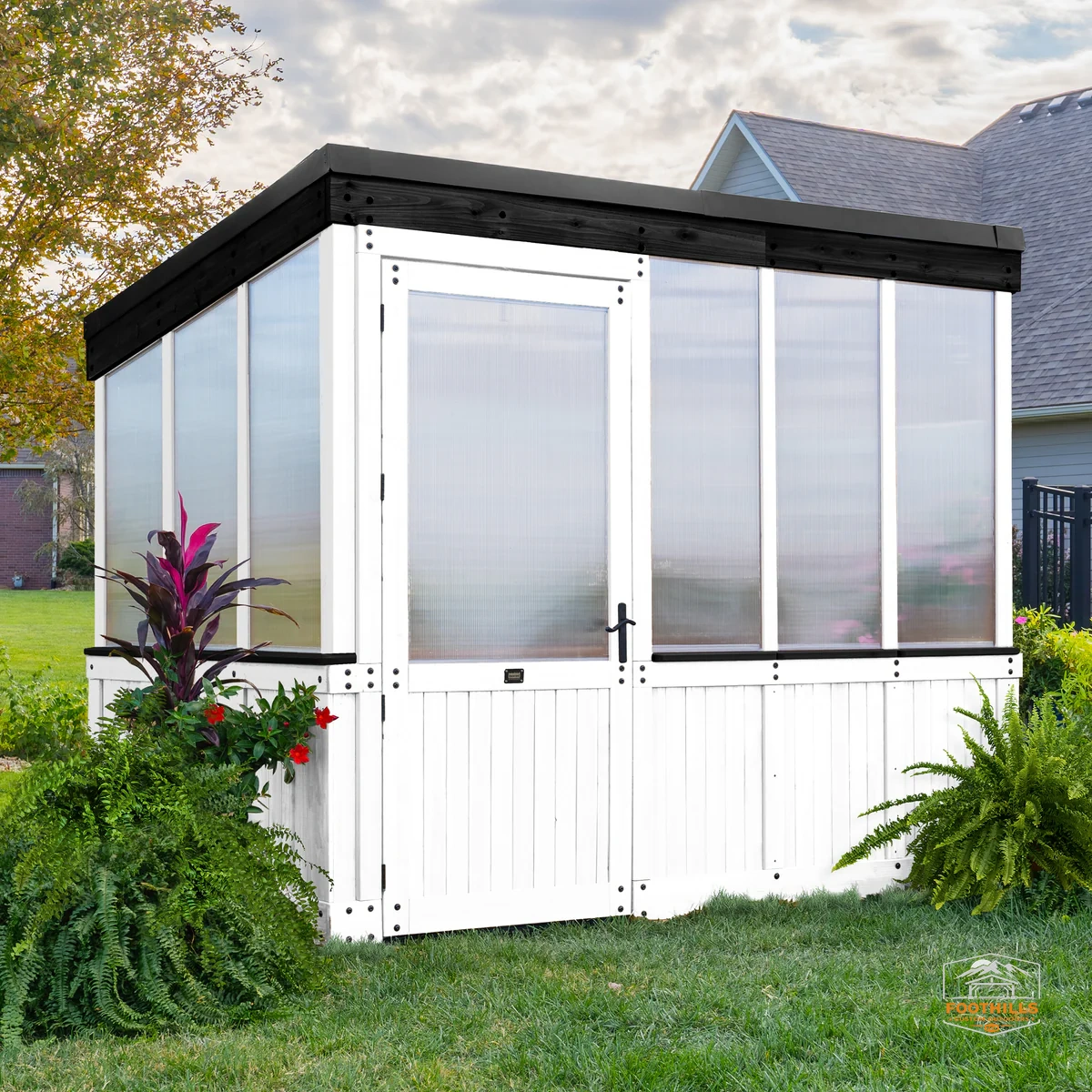
9x6 Willow Greenhouse - Pre-Stained & Sealed White
A compact contemporary cedar greenhouse in a sealed white finish with 54 sq ft, 4-wall polycarbonate panels, a workstation, a vent window, an exhaust fan, and built-in power.
- Weather-Tested & Proven
- 5 Year Warranty
- Professional Installation
- Free Shipping
From $1,999
5-Star
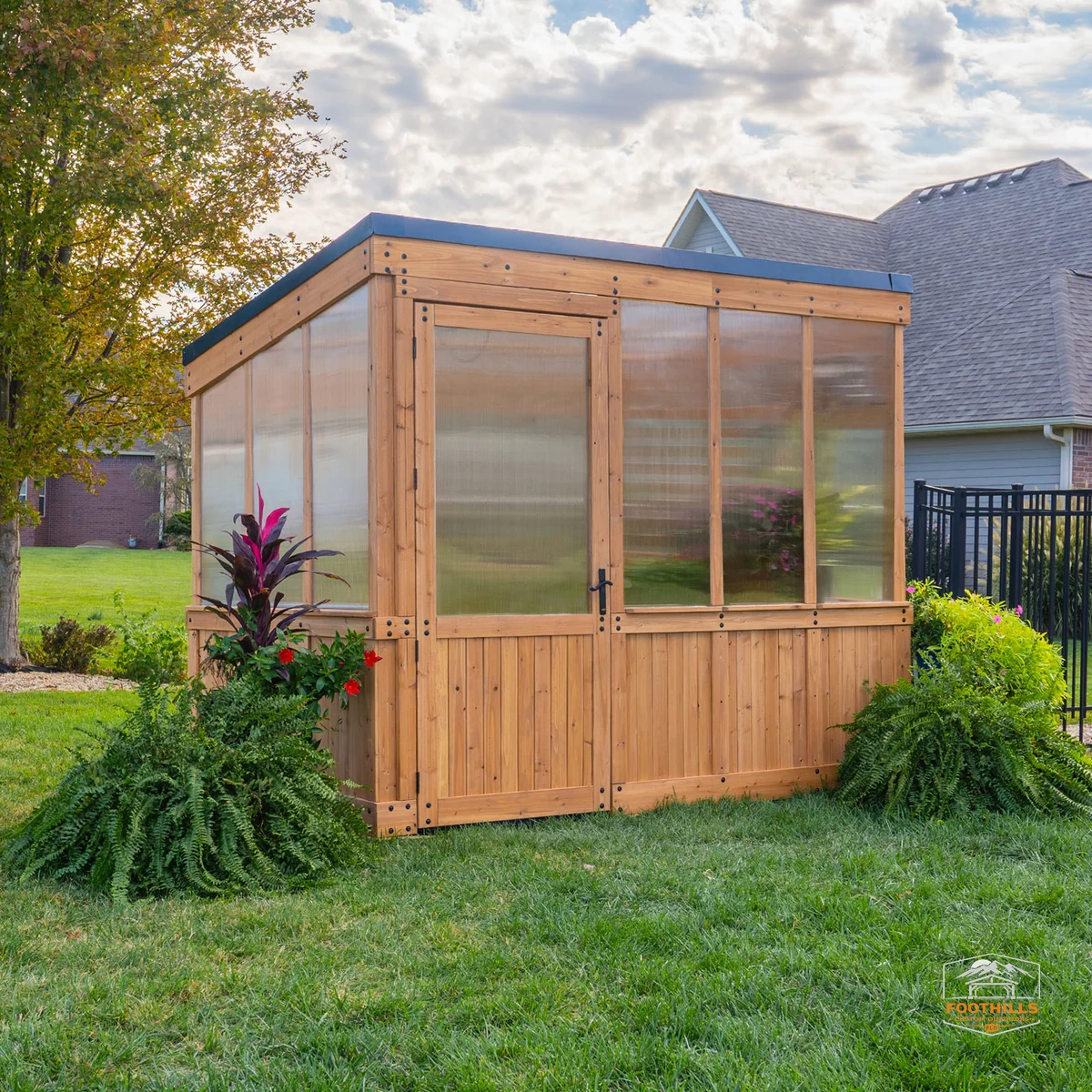
9x6 Willow Greenhouse
A compact contemporary cedar greenhouse with 54 sq ft, 4-wall polycarbonate panels, a workstation, a vent window, an exhaust fan, and built-in power for year-round growing.
- Weather-Tested & Proven
- 5 Year Warranty
- Professional Installation
- Free Shipping
From $349
5-Star
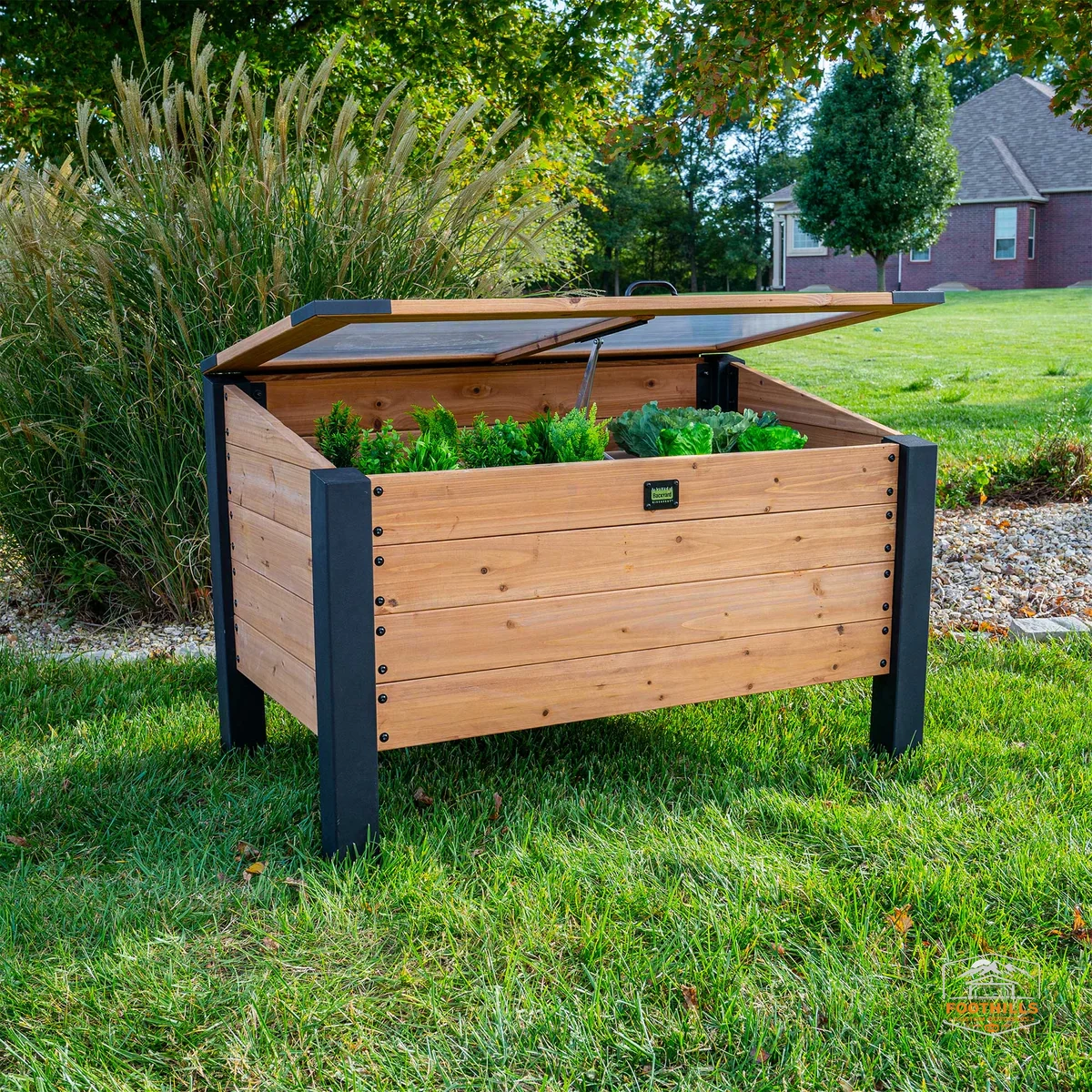
Aggie Cold Frame Box
A compact cedar cold frame planter with a temperature-activated lid, double-wall polycarbonate panels, powder-coated steel legs, and a mesh-lined base for season-extending growth.
- Weather-Tested & Proven
- 5 Year Warranty
- Professional Installation
- Free Shipping
From $299
5-Star
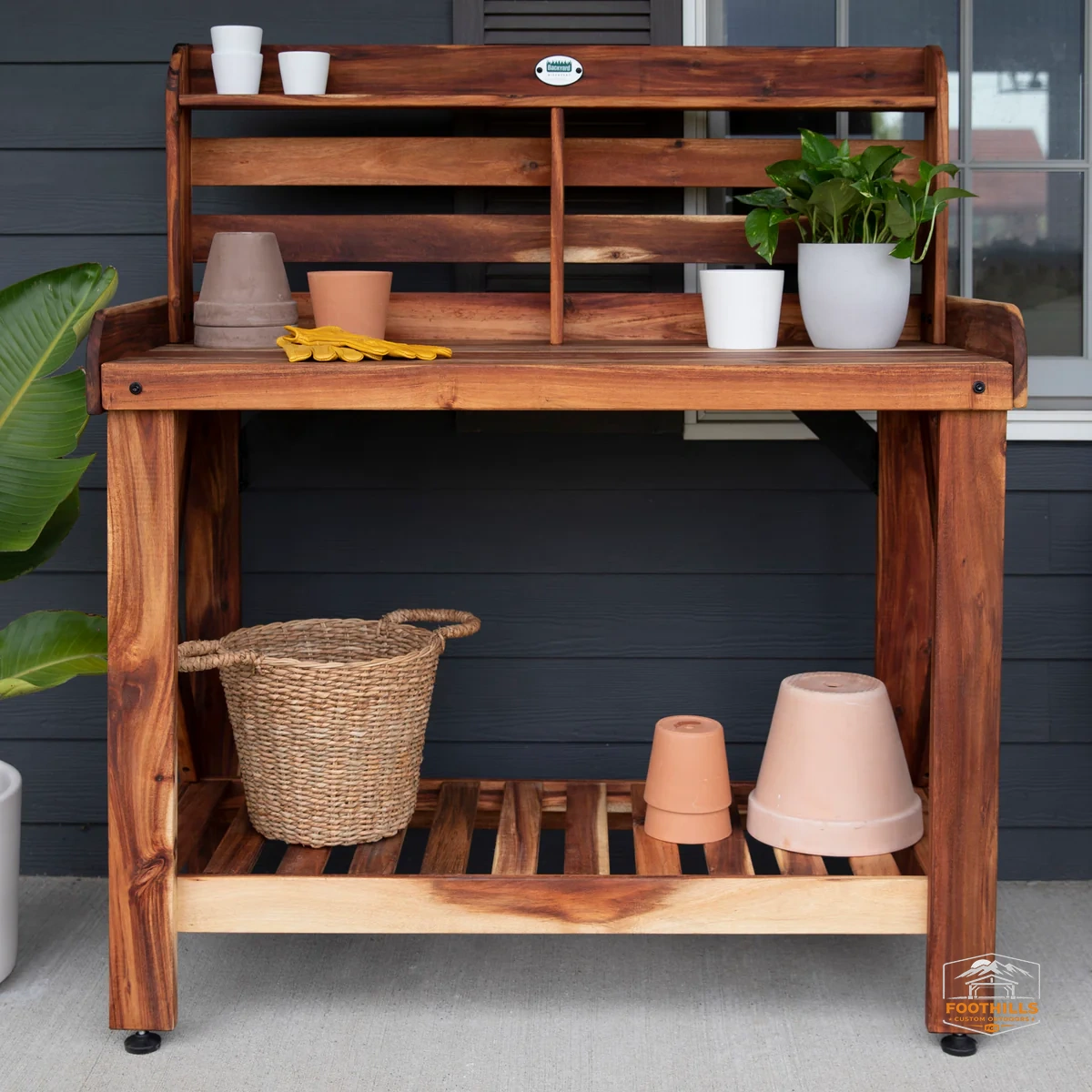
Potting Table/Bench/Serving Bar - Acacia Wood
A versatile acacia-wood potting bench and serving bar with a spacious top, lower slat storage shelf, leveling feet, and a linseed oil finish for indoor or outdoor use.
- Weather-Tested & Proven
- 5 Year Warranty
- Professional Installation
- Free Shipping
How to Choose the Right Greenhouse for Knoxville's Growing Conditions
Polycarbonate vs. Glass: Which Glazing Wins in East Tennessee?
This is the single most important material decision you will make, and the answer in our region is usually polycarbonate. Here is why. Twin wall polycarbonate panels provide several advantages that matter specifically in East Tennessee:
Hail resistance
Our summer thunderstorms can produce hail that would shatter single pane glass. Polycarbonate is virtually unbreakable.
Light diffusion
Polycarbonate scatters light evenly throughout the greenhouse, eliminating hot spots and reducing the risk of leaf burn during our intense summer sun.
Better insulation
Twin wall panels create an air gap that insulates significantly better than single pane glass, reducing heating costs during winter.
Wind resistance
Properly installed polycarbonate handles the 50 to 60 mph gusts our summer storms can produce.
Glass is beautiful and offers superior clarity for maximum light transmission. It is the right choice for homeowners who prioritize the Victorian or conservatory aesthetic and are willing to invest in tempered safety glass for storm resistance. Glass greenhouses are also easier to clean and maintain their clarity over time.
Our recommendation for most Knoxville gardeners: twin wall polycarbonate for performance and durability. Glass for those who want the classic look and are prepared for the premium investment.
Aluminum Frame vs. Cedar Wood vs. Steel
Aluminum
Most popular frame material in our humidity. Rust proof, lightweight, strong, and powder coated. Zero maintenance.
Cedar Wood
Naturally rot and insect resistant. Warm, natural aesthetic for wooded lots. Requires periodic sealing.
Steel
Avoid untreated steel as it will rust. Only recommended if hot dip galvanized or powder coated.
Freestanding vs. Lean To: Matching Your Property Layout
Freestanding
Place anywhere with adequate sun. Offer 360 degree light access and maximum design flexibility.
Lean To
Attach directly to home/garage. Shared wall heat and convenient access, but less light and may require permits.
Summer Cooling, Winter Heating, and Managing Knoxville's Humidity
This is where most greenhouse purchases succeed or fail in East Tennessee. A greenhouse is not just a building. It is a climate control system. If you do not plan for our extremes, you will have a very expensive oven in July and a very cold shed in January.
How to Keep Your Greenhouse from Cooking in July
By mid May in Knoxville, an unventilated greenhouse can easily exceed 120 degrees inside. Your plants will not survive that.
Here is how we design cooling into every greenhouse we install:
- Automatic roof vent openers that respond to temperature changes without electricity. When the air inside reaches a set temperature, hydraulic arms open the vents automatically. When it cools, they close.
- Exhaust fans (solar powered or electric) mounted at one end of the greenhouse pull hot air out and create continuous airflow.
- Shade cloth (60 to 70 percent density) draped over the roof during summer blocks the most intense sun while still allowing enough light for healthy growth.
- Intake vents at the base of the walls allow cooler air to flow in as hot air rises and exits through the roof.
The key principle is cross ventilation: cool air in at the bottom, hot air out at the top. Without this, no shade cloth in the world will save your plants.
Heating Through Tennessee Winters Without Breaking the Bank
Knoxville winters are generally mild, but we regularly see nights in the 20s and occasionally into the teens. A completely unheated greenhouse will protect plants from wind and frost damage, but it will not keep tropical or warm season crops alive during extended cold snaps.
Here are the most common heating strategies we recommend:
- Passive solar thermal mass: Black painted water barrels absorb heat during the day and release it slowly at night. This is free to operate and surprisingly effective for moderate cold protection.
- Electric space heaters with thermostats provide reliable, consistent heat. They are the easiest to install and most commonly used by Knoxville hobby growers.
- Natural gas heaters are an option if you have a gas line near the greenhouse location, though running the line can add cost.
- Bubble wrap insulation applied to the interior walls of a polycarbonate greenhouse significantly reduces heat loss during the coldest nights.
For most Knoxville gardeners growing cold hardy greens, herbs, and starting spring seedlings, passive solar and a backup electric heater are all you need.
Ventilation and Humidity Control: Beating Mold, Mildew, and Fungus Gnats
The Tennessee Valley’s natural humidity is the enemy inside a greenhouse. Without proper airflow, you are creating a perfect environment for powdery mildew, damping off disease, and fungus gnats.
Our ventilation approach:
- High volume oscillating fans inside the greenhouse keep air moving across plant surfaces and prevent moisture from settling
- Properly sized intake and exhaust vents create continuous air exchange, replacing damp interior air with drier outside air
Avoid overwatering, which compounds the humidity problem. Drip irrigation systems are far more effective than overhead sprinklers in a greenhouse environment
Building Your Greenhouse on East Tennessee's Red Clay and Rocky Soil
Gravel Pad vs. Concrete Slab: What Works on Your Lot?
Gravel is our preferred foundation material for most residential greenhouses. Here is why:
- It drains fast, which is critical in a region that gets over 50 inches of rain per year. Water that pools under your greenhouse will rot floorboards and create pest problems.
- It allows you to adjust and level the surface without heavy equipment.
- It is significantly less expensive than poured concrete.
Concrete slabs work well for permanent, large scale structures, but they hold water on the surface unless properly sloped with drainage channels. In our clay heavy soil, poor drainage around a concrete pad can create persistent puddles.
For smaller hobby greenhouses, a level gravel base with landscape timber edging is the sweet spot of cost, performance, and ease.
Leveling on Sloped Lots and Anchoring Against Storm Winds
If your yard slopes (and in Knoxville, it probably does), we use a combination of:
- Timber frame base kits to create a level perimeter on moderate slopes
- Tiered retaining walls for steeper grades
- Ground anchors or concrete footings to secure the structure against the wind gusts our summer storms bring
We have installed greenhouses on all types of Knoxville terrain. If your lot is challenging, that is exactly the kind of problem we enjoy solving.
Year Round Greenhouse Gardening in Knoxville's Zone 7a/7b
Starting Seeds in February and Extending Your Harvest Into November
A greenhouse does not just extend your season by a few weeks. It can add months to both ends:
February through March
Start tomatoes, peppers, eggplant, and flower seedlings indoors under controlled conditions, giving them a 6 to 8 week head start on the outdoor season.
April
Transplant hardened off starts into garden beds while your greenhouse continues to produce lettuce, herbs, and greens.
October through November
Move frost sensitive plants into the greenhouse to extend production well beyond the first killing frost.
December through February
Grow cold hardy crops like spinach, kale, lettuce, Swiss chard, and herbs in an unheated or minimally heated greenhouse.
Greenhouse Supplies and Local Resources
Knoxville has excellent local resources for greenhouse growers. Specialty seed suppliers and garden centers in the area carry professional grade supplies, including greenhouse specific soil mixes, propagation trays, heating mats, and shade cloth.
The University of Tennessee Institute of Agriculture (UTIA) and the Knox County Master Gardeners program are also valuable resources for local growing advice, cultivar recommendations, and seasonal planting calendars tailored to our exact climate zone.
Greenhouse Permits, Zoning, and Neighborhood Rules in Knox County
When Does a Greenhouse Need a Building Permit?
The general guidelines for Knox County:
- Freestanding structures under a certain square footage (typically 120 square feet, though this varies by zoning district) usually do not require a building permit.
- Running electrical, plumbing, or gas to the greenhouse almost always requires a separate permit and inspection, regardless of the greenhouse size.
- Attached lean to structures connected to your home are typically treated as additions and require a permit.
We verify the specific requirements for your property before we begin any work.
HOA Friendly Greenhouse Designs: Powder Coated Frames and Victorian Styles
If your HOA has aesthetic requirements, you have options:
- Powder coated aluminum frames in green, black, or bronze blend cleanly into most landscape designs and satisfy “earth tone” requirements.
- Victorian and English garden style greenhouses with decorative ridge cresting and ornamental details look like intentional architectural additions rather than utility structures.
- Strategic placement behind the home, screened by fencing or landscaping, addresses visibility concerns.
We can help you select a style and placement that keeps your HOA happy while giving you the greenhouse you want.
We Build It Right So You Can Start Growing: Full Installation Service
Our Greenhouse Installation Process
Building an outdoor kitchen involves a lot of moving parts. That is exactly why most homeowners want one team managing the entire project. Here is how we work:
Consultation
We discuss what you want to grow, how much space you have, and what level of climate control you need.
Site evaluation
We visit your property, assess the terrain, sun exposure, drainage, and proximity to utilities.
Foundation preparation
We install the gravel pad, timber frame, or paver surface your greenhouse will sit on.
Structure assembly
We build the greenhouse on site, ensuring every panel, vent, and door is properly sealed and aligned.
Ventilation setup
We install automatic vent openers, exhaust fans, and shade cloth mounting systems.
Optional add ons
Electrical connections for heaters and lighting, irrigation hookups, and shelving installation.
Growing guidance
We walk you through the system and share tips specific to greenhouse gardening in our local climate.
A greenhouse is only as good as its installation. A poorly built structure leaks, overheats, and falls apart in wind. We make sure yours does none of those things.
Frequently Asked Questions About Greenhouses in East Tennessee
What is the best greenhouse for the Tennessee climate?
For most Knoxville gardeners, a twin wall polycarbonate greenhouse with an aluminum frame offers the best balance of durability, insulation, and storm resistance.
How do I keep the greenhouse cool in summer?
A combination of automatic roof vents, exhaust fans, shade cloth, and low wall intake vents provides effective cooling even during our hottest months.
Do I need a permit?
Small freestanding greenhouses typically do not. Electrical and plumbing connections usually do. We verify requirements for your specific property.
Can you install on a sloped lot?
Yes. We use timber frame bases, gravel leveling, and anchoring systems designed for East Tennessee terrain.
Polycarbonate or glass?
Polycarbonate is our default recommendation for East Tennessee due to its hail resistance, insulation, and light diffusion. Glass is the right choice for homeowners who prioritize the classic aesthetic and are willing to invest in tempered panels.
What can I grow year round in a Knoxville greenhouse?
Cold hardy greens (spinach, kale, lettuce), herbs, and root vegetables can be grown through winter in a minimally heated greenhouse. With supplemental heat, you can grow warm season crops year round.