
Wooden Playhouses for Sale in Knoxville: Cedar Playhouses Delivered and Built
Give Your Kids a Backyard Retreat They Will Never Forget. There is something magical about a wooden playhouse. It becomes a castle, a kitchen, a secret hideout, a pirate ship. It is wherever your child’s imagination takes them. At Foothills Custom Outdoors, we help Knoxville families find beautiful, durable wooden playhouses that hold up to Tennessee weather and hold up to the boundless energy of your kids. And we do not just sell you a box of lumber. We deliver, level, assemble, and anchor every playhouse we carry. We are Nick and Sam, and we believe every kid deserves an outdoor space that is truly their own.
Shop by Type
Compact and Toddler Playhouses
Ground level cottages with low doors, play kitchens, and snack windows for your littlest explorers.
Elevated Treehouse Style
Raised platforms with ladders, staircases, and the thrill of being "up high".
Two Story Playhouses
Multi level structures with lofts, slides, and maximum play space
Playhouses with Slides and Swings
Combination units that add physical activity to imaginative play
Luxury and Custom
Premium, architecturally styled structures that look as good as they play.
Cedar playhouses and cottages built for years of imaginative play, professionally assembled
Give kids a backyard world of their own with our cedar playhouses. From compact play cottages with working doors and play kitchens to elevated clubhouses with wave slides and wrap-around decks, each one is built from naturally durable cedar and finished to handle the outdoors. Every playhouse meets or exceeds ASTM safety standards and carries a 5-year warranty. As a Knoxville-based authorized Backyard Discovery dealer, Foothills Custom Outdoors delivers and professionally assembles your playhouse, so it is safe, sturdy, and ready for play without the weekend-long build. Free shipping is included on every order.
From $549
5-Star
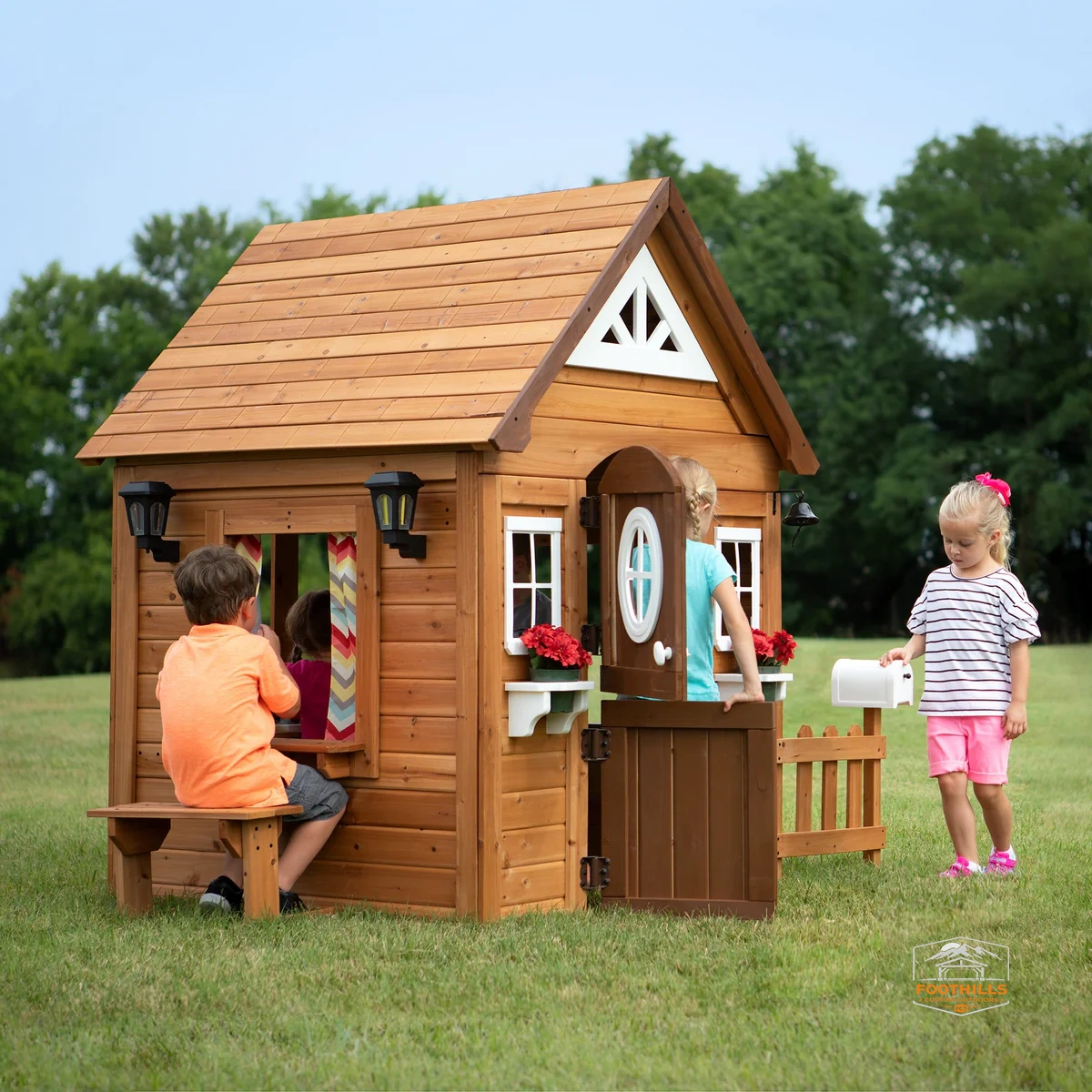
Aspen Playhouse
A cedar kids’ playhouse with a working Dutch door, play kitchen, snack-bar bench, window planters, mailbox, and dinner bell, in a light brown and white finish.
- Weather-Tested & Proven
- 5 Year Warranty
- Professional Installation
- Free Shipping
From $999
5-Star
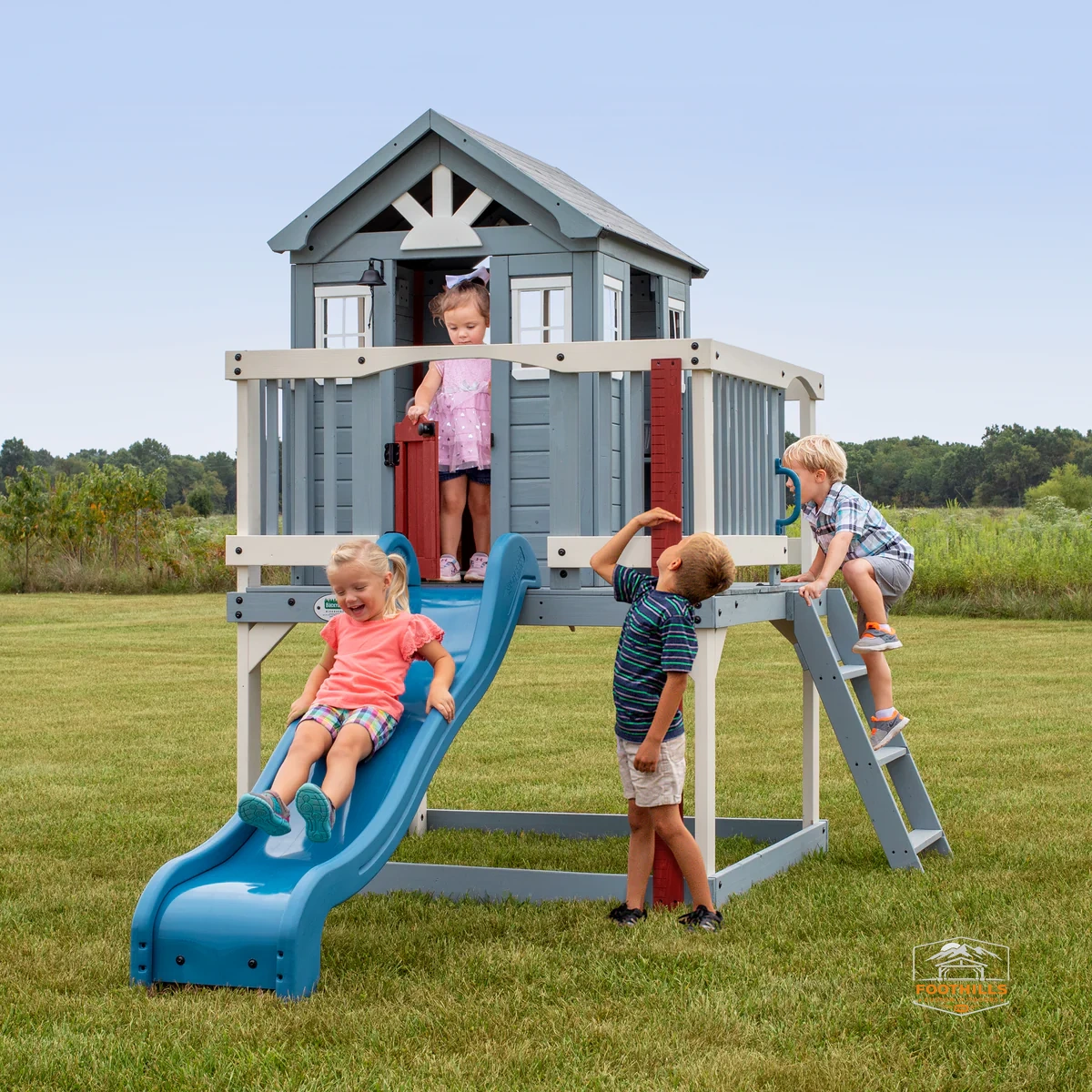
Beacon Heights Playhouse
An elevated cedar playhouse in light blue with a wrap-around deck, 6-foot wave slide, play kitchen, and built-in growth board, sized to bring big fun to smaller yards.
- Weather-Tested & Proven
- 5 Year Warranty
- Professional Installation
- Free Shipping
From $329
5-Star
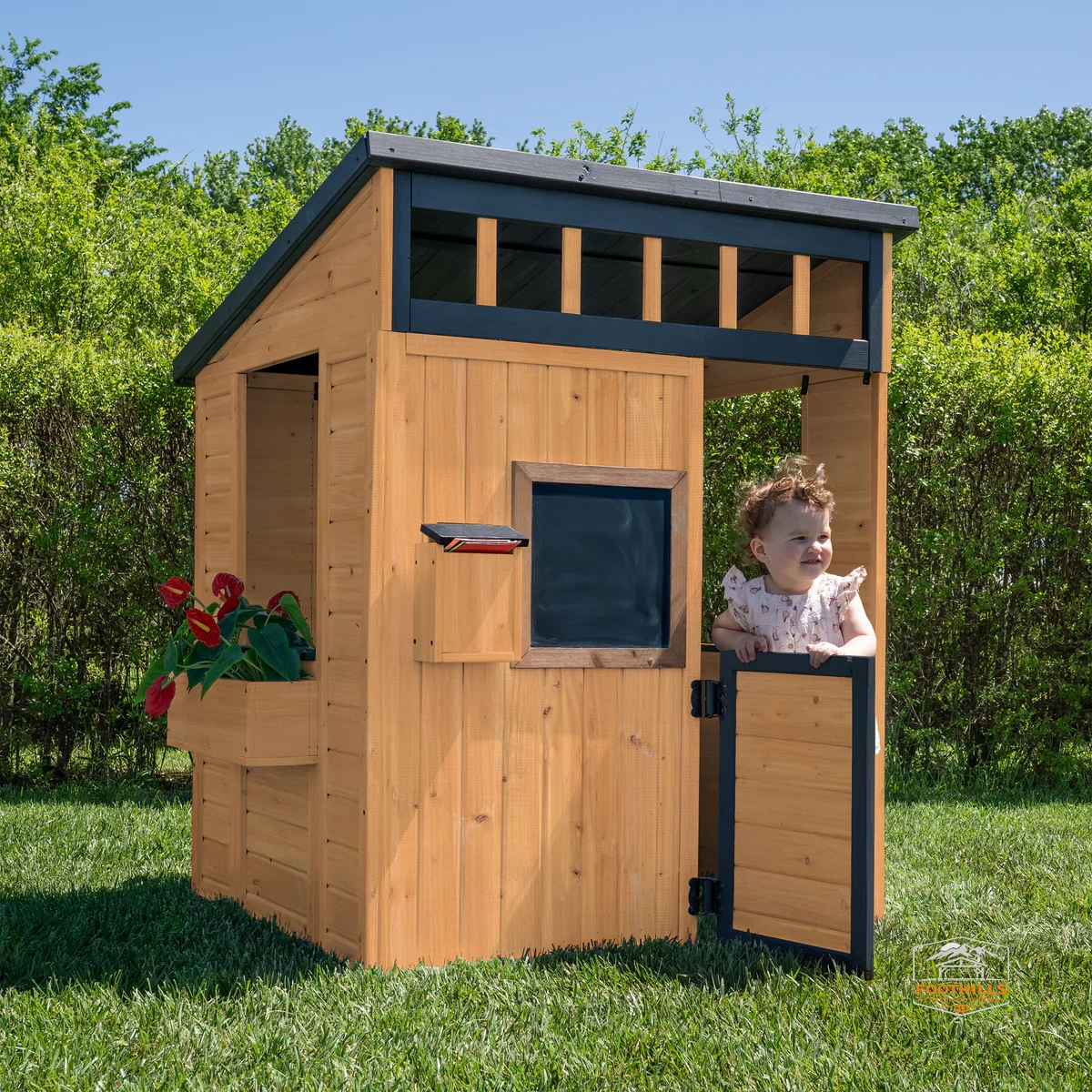
Caraway Cottage - Light Brown
A modern-farmhouse cedar play cottage for indoor or outdoor use, with a play kitchen, half door, flower box, mailbox, and chalkboard, in light brown with black trim.
- Weather-Tested & Proven
- 5 Year Warranty
- Professional Installation
- Free Shipping
From $379
5-Star
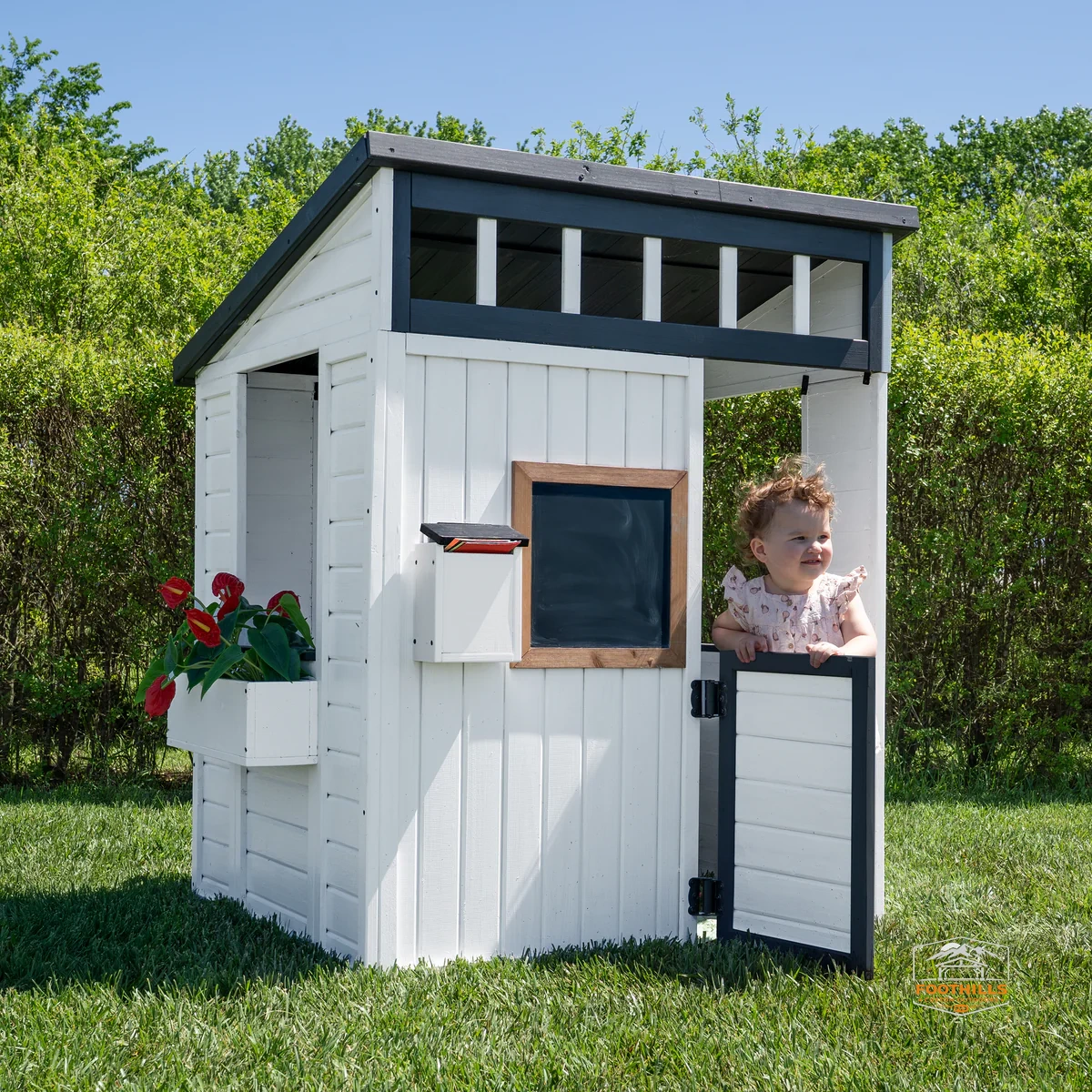
Caraway Cottage - White
A modern-farmhouse cedar play cottage for indoor or outdoor use, with a play kitchen, half door, flower box, mailbox, and chalkboard, in a crisp white finish with black trim.
- Weather-Tested & Proven
- 5 Year Warranty
- Professional Installation
- Free Shipping
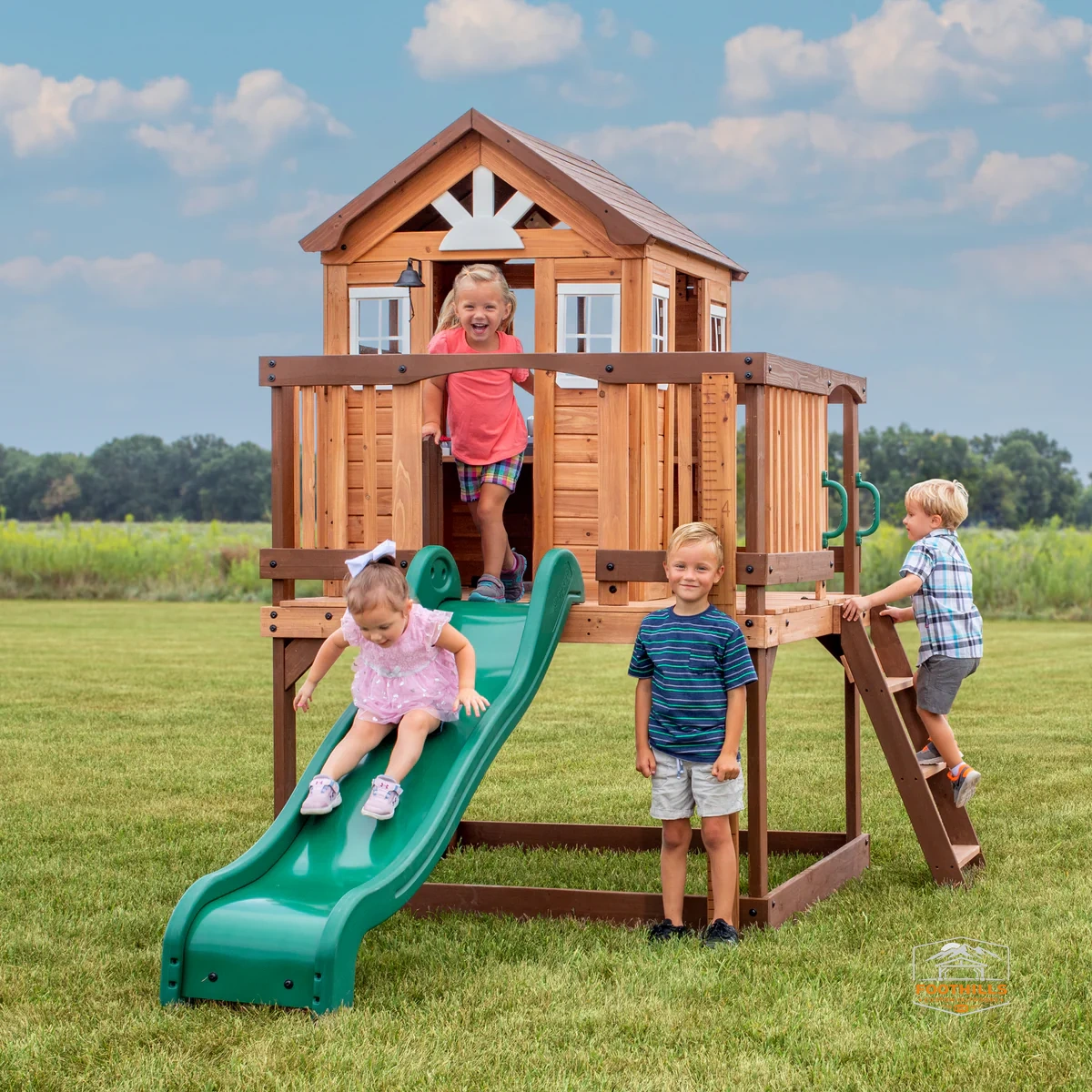
From $999
5-Star
Echo Heights Playhouse
An elevated cedar playhouse in light brown with a wrap-around deck, 6-foot wave slide, play kitchen, and built-in growth board, sized to fit any backyard.
- Weather-Tested & Proven
- 5 Year Warranty
- Professional Installation
- Free Shipping
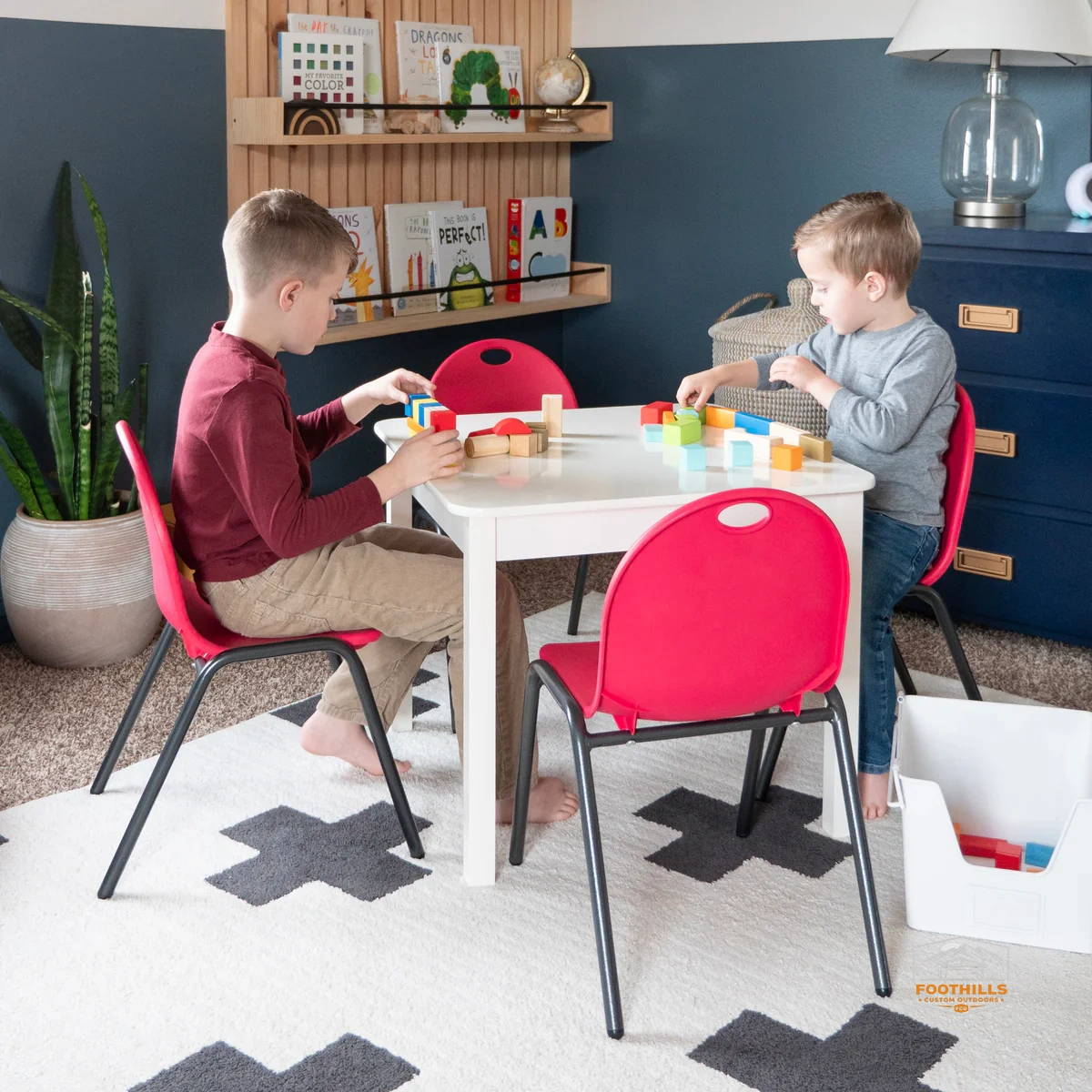
From $99
5-Star
Kid's Stacking Chairs - 4 Pack
A set of four lightweight, stackable kids’ chairs in red, blue, and ivory, with molded seats and carry handles, easy to clean and built for years of use.
- Weather-Tested & Proven
- 5 Year Warranty
- Professional Installation
- Free Shipping
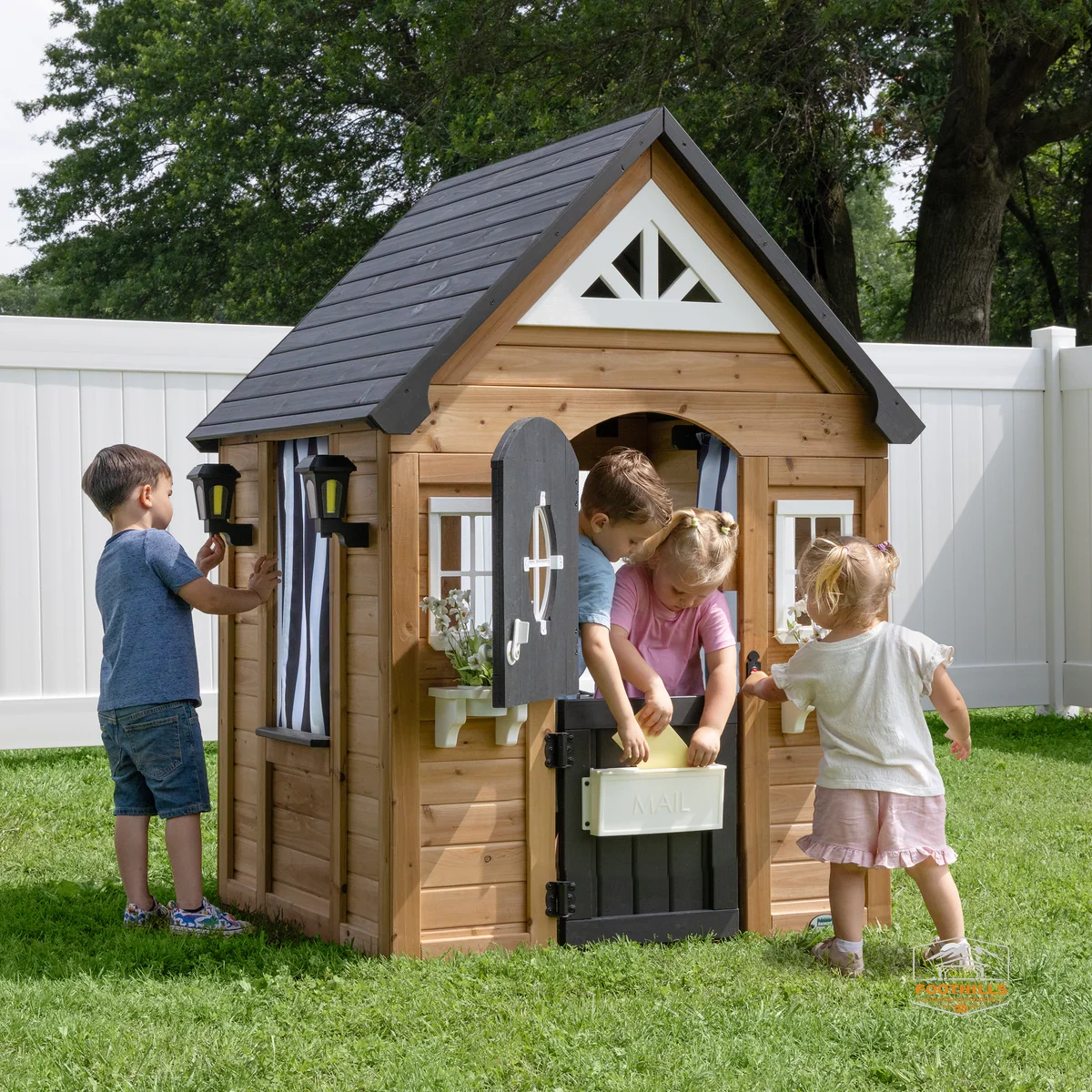
From $349
5-Star
Mystic Playhouse
A cedar playhouse with a split Dutch door and oval window, play kitchen, window planters with flowerpots, and a doorbell, in light brown with slate accents and white trim.
- Weather-Tested & Proven
- 5 Year Warranty
- Professional Installation
- Free Shipping
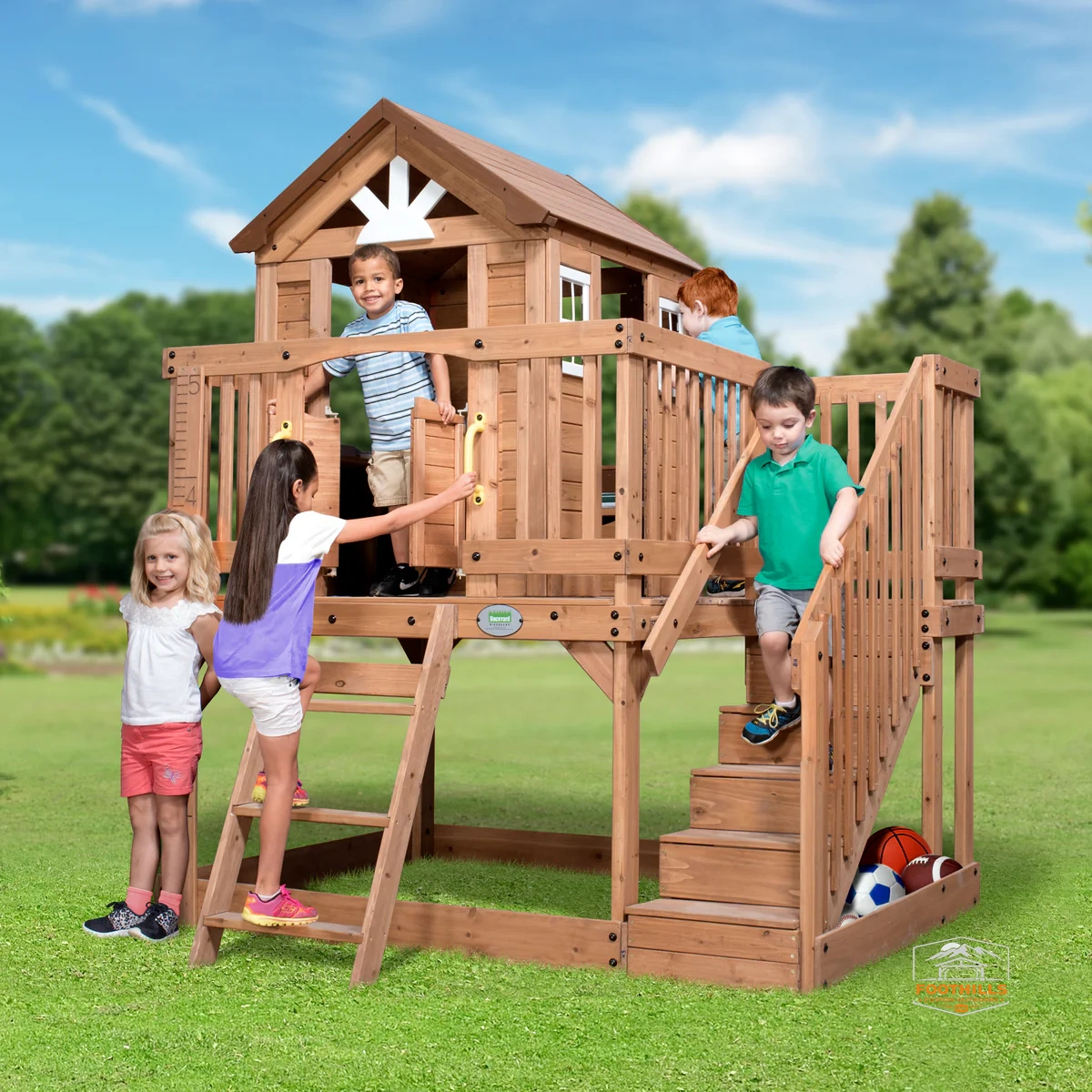
From $999
5-Star
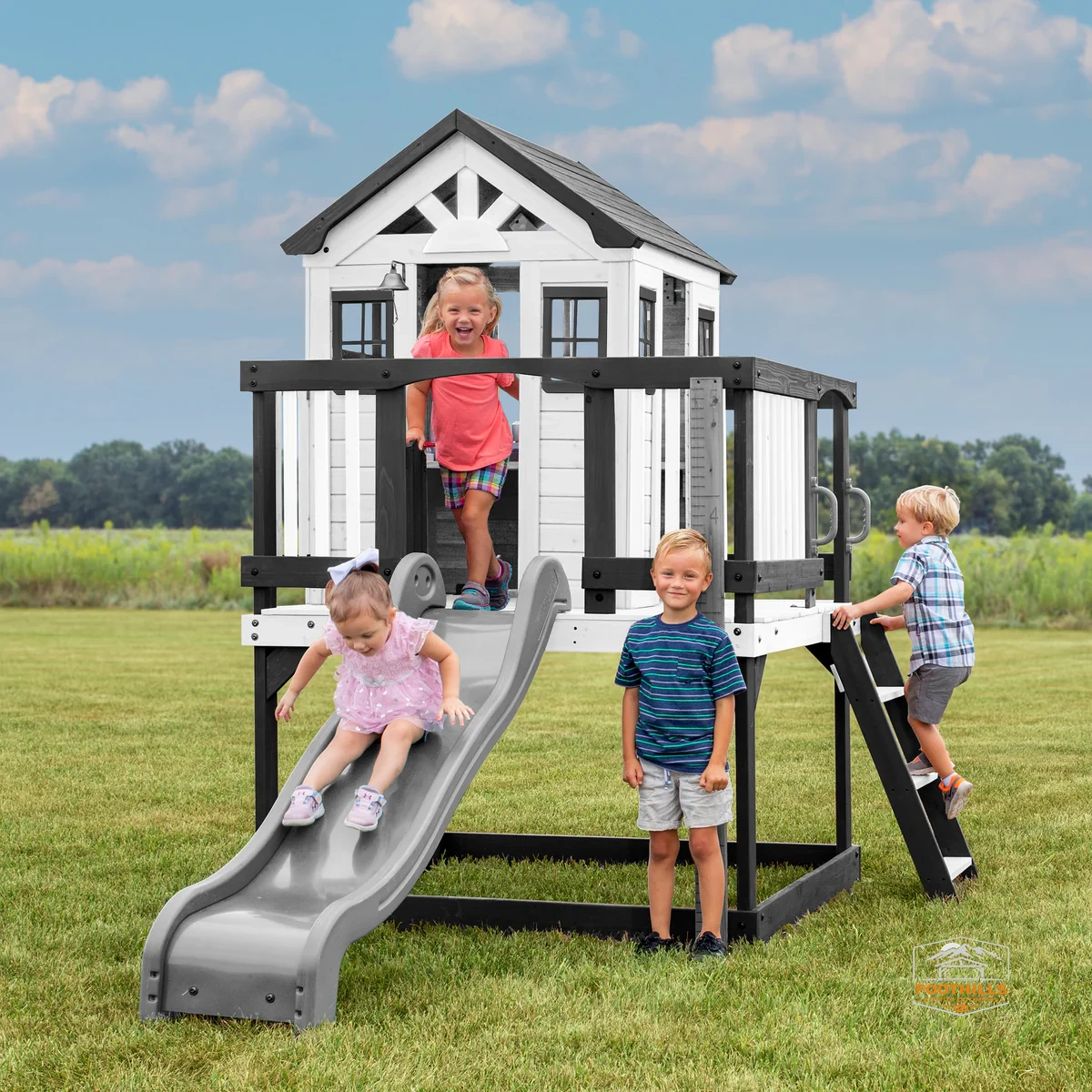
Scenic Heights Wooden Playhouse
An elevated cedar treehouse-style playhouse with saloon-door and side-porch entries, a play kitchen, and a cushioned bench with toy storage, in light brown with white trim.
- Weather-Tested & Proven
- 5 Year Warranty
- Professional Installation
- Free Shipping
From $999
5-Star
Sweetwater Heights Elevated Playhouse
An elevated cedar playhouse in white with a wrap-around deck, 6-foot wave slide, play kitchen, and growth board, with usable space underneath for a sandbox or storage.
- Weather-Tested & Proven
- 5 Year Warranty
- Professional Installation
- Free Shipping
From $279
5-Star
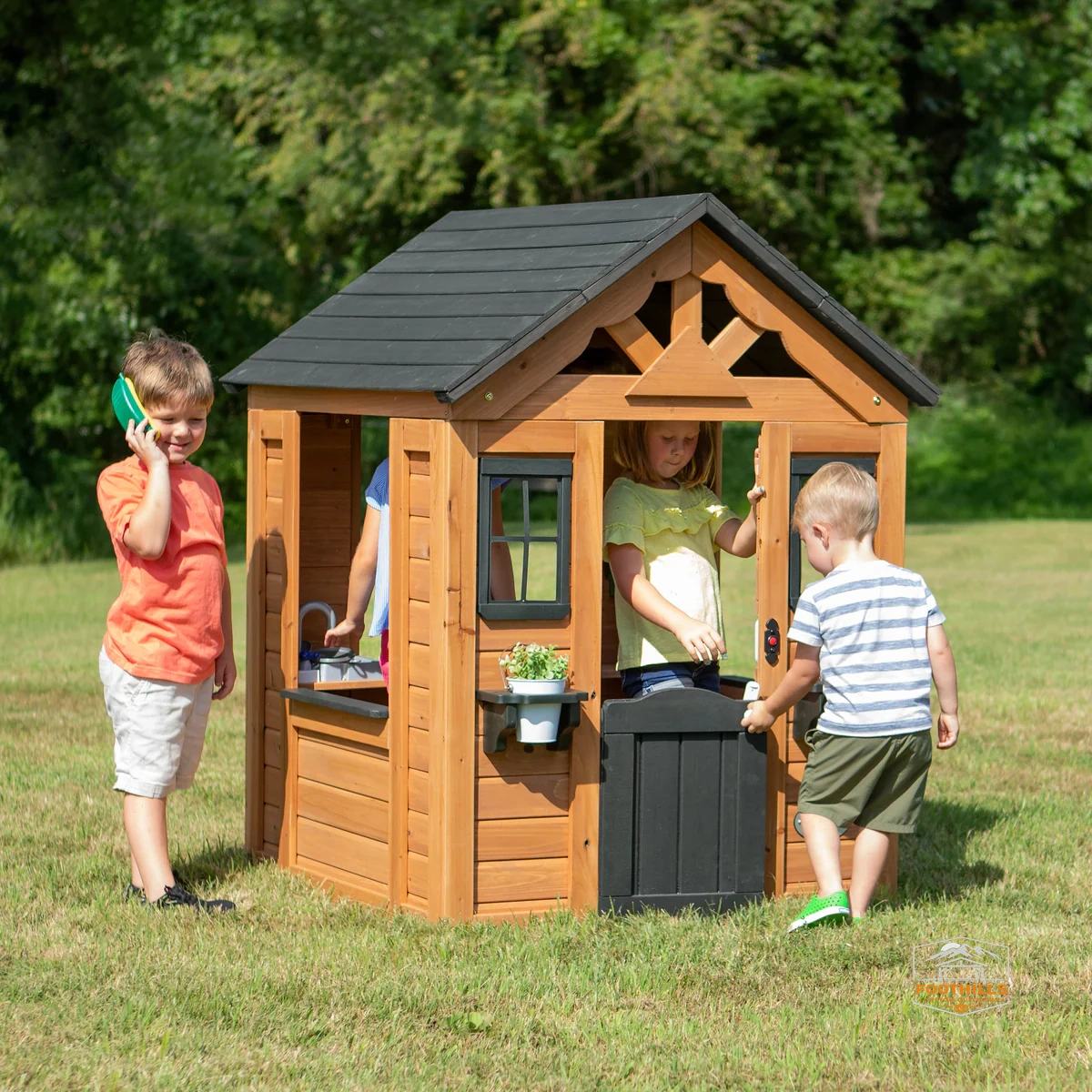
Sweetwater Playhouse - Cedar
A cedar kids’ playhouse with a play kitchen, working half door, snack-bar window, and window planters, finished in light brown with elegant black trim.
- Weather-Tested & Proven
- 5 Year Warranty
- Professional Installation
- Free Shipping
From $329
5-Star
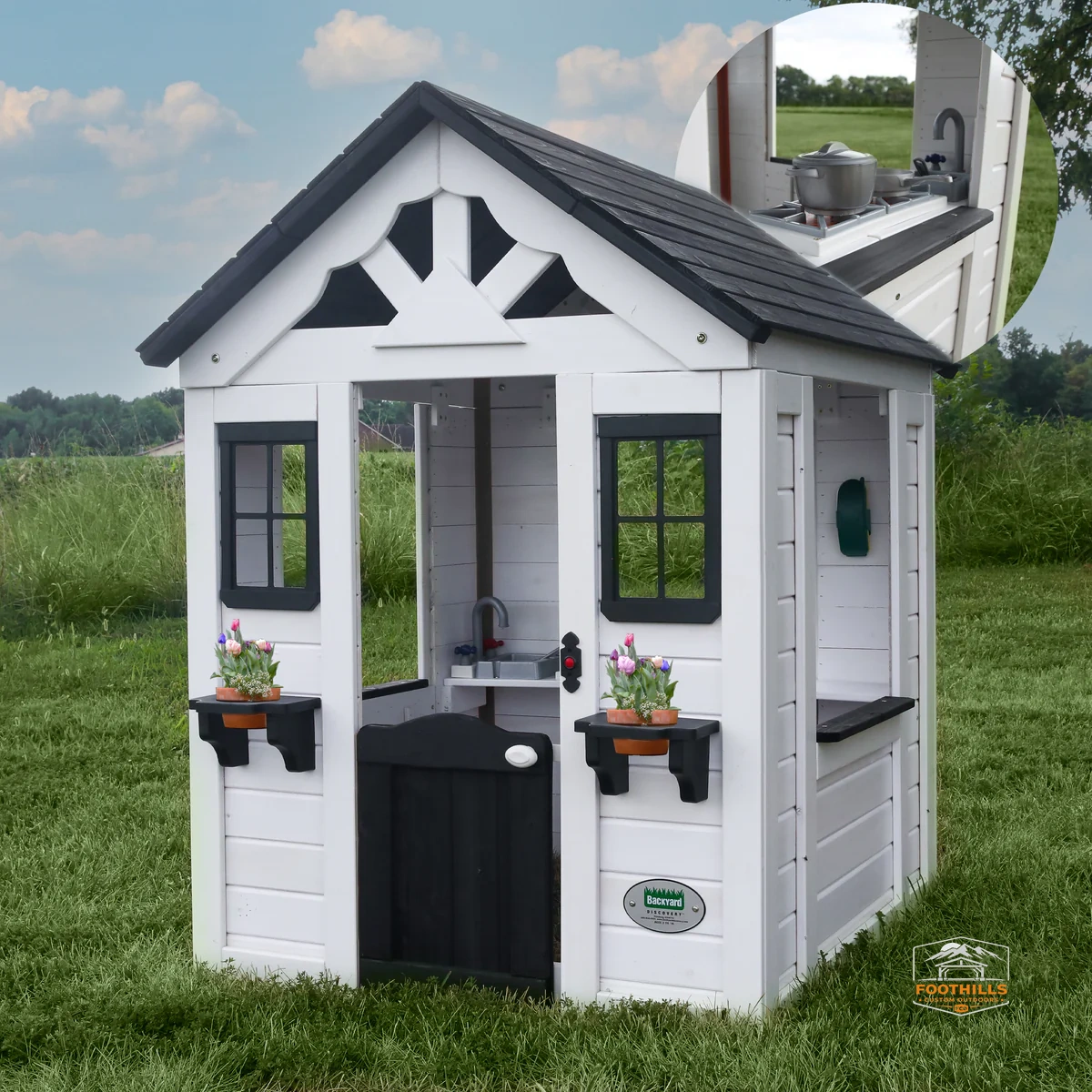
Sweetwater Playhouse - White
A cedar kids’ playhouse with a play kitchen, working half door, snack-bar window, and window planters, finished in crisp white with elegant black trim.
- Weather-Tested & Proven
- 5 Year Warranty
- Professional Installation
- Free Shipping
From $249
5-Star
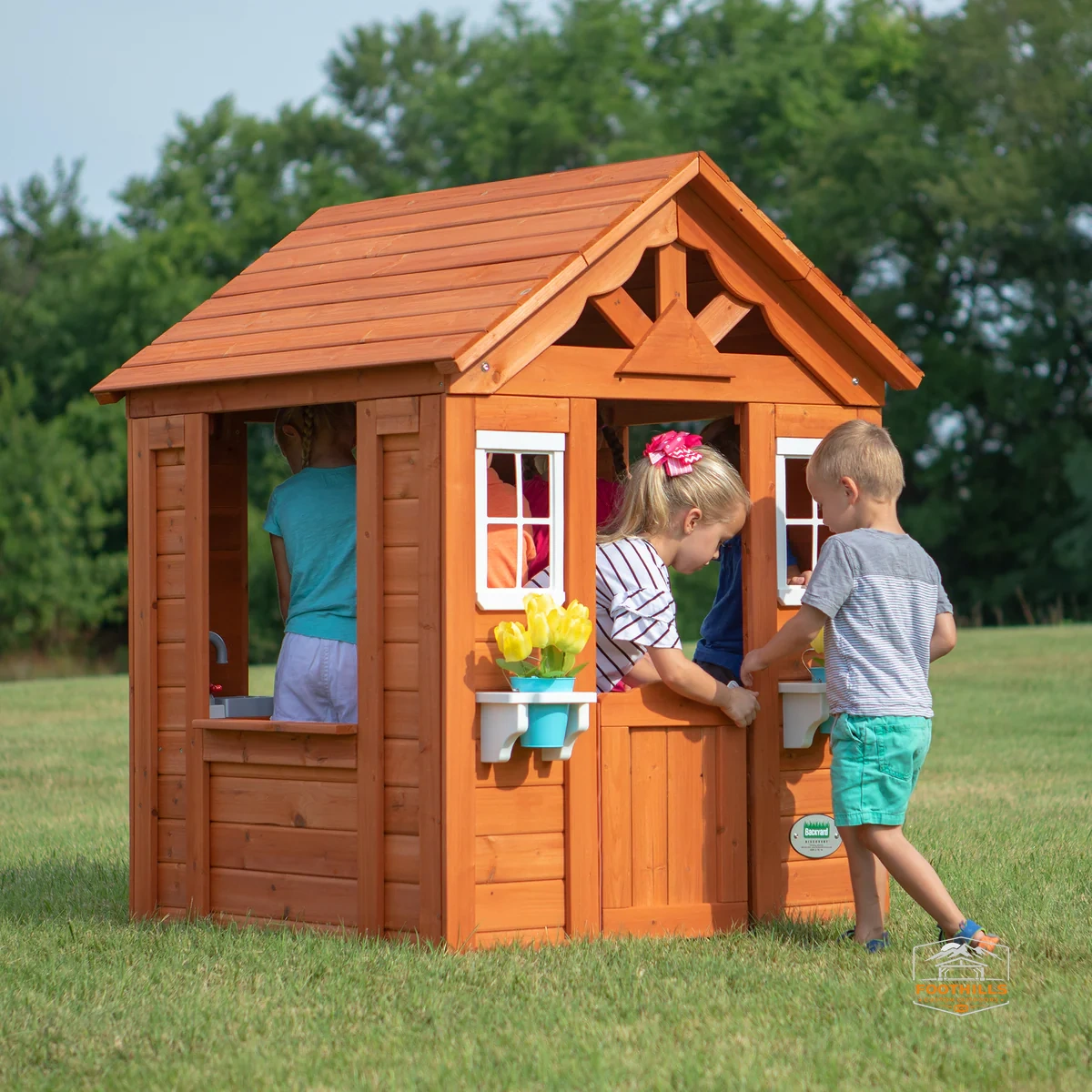
Timberlake Playhouse
A roomy cedar kids’ playhouse with a play kitchen, working half door, snack-bar window, and window planters, finished in warm burnt sienna with white trim.
- Weather-Tested & Proven
- 5 Year Warranty
- Professional Installation
- Free Shipping
How to Choose a Wooden Playhouse Your Kids Will Love (And That Lasts)
Ground Level Cottages vs. Elevated Treehouses vs. Two Story Estates
Ground level playhouses are the safest option for toddlers and young children. They sit directly on the ground (or a low platform), feature child height doors and windows, and typically include imaginative play elements like built in kitchens, service windows, and doorbells. They are perfect for ages 2 to 6.
Elevated treehouse style playhouses add the element of height. Kids access the main level via a ladder or staircase, and many include a slide for the trip down. The raised platform creates a sense of adventure and a “clubhouse” feeling that older kids love. Best for ages 4 to 10.
Two story playhouses are the ultimate backyard feature. They combine climbing walls, tube slides, lofts, and expansive play areas into a single structure. These are significant investments, but they serve multiple children, multiple age ranges, and years of active use.
When choosing, think about:
- Your children’s current ages and physical abilities
- How many kids will be using it regularly
- The available space in your yard (remember the safety clearance zones)
- How many years of use you want to get from the investment
Play Features That Actually Get Used
Not every bell and whistle is worth paying for. Based on our experience with Knoxville families, here are the features that deliver the most play value:
- Working doors and windows: Kids love opening, closing, and peeking through them. This is imaginative play 101.
- Play kitchens and service counters: Consistently among the most used features for ages 2 to 7. Kids will ‘cook’ for hours.
- Slides: The universal crowd pleaser. Wave slides are more fun than straight slides and fit into tighter spaces.
- Ladders and climbing elements: These build confidence and motor skills. Flat step ladders are safer for younger kids.
- Loft spaces: The ‘secret room’ factor. Kids love having a private upper level.
- Doorbells and mailboxes: Small details, big imaginations.
Which Wood Survives East Tennessee: And How to Stop the Bugs
Cedar vs. Pressure Treated Pine: The Honest Comparison
Cedar (specifically Western Red Cedar or similar rot resistant species) is the best wood for outdoor playhouses in East Tennessee. Period.
Here is why:
- It naturally resists rot, decay, and insect damage without heavy chemical treatments.
- It does not splinter as aggressively as pine, making it safer for little hands.
- It weathers beautifully, even if you miss a year of sealing.
- It does not require the chemical pressure treatment process, which means the surface your toddler touches every day is free of those compounds.
Pressure treated pine costs less, and it resists rot reasonably well. But in our humidity, it is more prone to warping, cracking, and splintering over time. It also requires more diligent and frequent maintenance to keep it in safe condition.
If your budget allows, cedar is the smarter long term investment for a structure your children will be climbing on, sitting in, and touching every day.
Carpenter Bees and Termites: East Tennessee's Wood Boring Pests
This is a topic we address with almost every customer, because it is one of the most common concerns for Knoxville homeowners with outdoor wood structures.
Carpenter Bees
Carpenter bees are the bigger day to day nuisance. These large, fuzzy bees bore perfectly round half inch holes into untreated or unstained wood to lay their eggs. They love smooth, unpainted surfaces, which makes playhouse trim, rafters, and fascia boards prime targets.
Prevention strategies:
- Stain or paint all exposed wood surfaces. Carpenter bees strongly prefer bare, unfinished wood. A good stain is your first line of defense.
- Citrus based deterrent sprays applied to vulnerable areas in early spring (when bees become active) discourage nesting.
- Carpenter bee traps placed near the structure intercept bees before they reach the wood.
- Fill existing holes with wood putty or steel wool to prevent reuse the following season.
Termites
Termites are a less visible but more destructive threat. Subterranean termites are active in East Tennessee and can cause serious structural damage if they reach your playhouse.
Prevention strategies:
- Elevate the playhouse off the ground on a gravel pad or concrete blocks. Direct wood to soil contact is an open invitation for termites.
- Maintain a gap between any wood components and the surrounding soil.
- Inspect the base of the structure annually for mud tubes, which are the telltale sign of subterranean termite activity.
Cedar vs. Pressure Treated Pine: The Honest Comparison
This is a topic we address with almost every customer, because it is one of the most common concerns for Knoxville homeowners with outdoor wood structures.
Here is the maintenance schedule we recommend:
- Within the first 6 months: Apply a high quality water repellent stain with UV protection. This establishes the initial barrier.
- Every 1 to 2 years: Power wash the structure gently (low pressure, wide nozzle) to remove algae, dirt, and mildew, then re apply stain after the wood dries completely.
- Annually: Inspect for any areas where the finish has worn away, especially on horizontal surfaces that collect the most rain and sun.
If your HOA requires the playhouse to match your home’s color scheme, most playhouse grade cedar and pine accept paint or stain beautifully. Semi transparent stains maintain the wood grain look. Solid stains and paints provide maximum UV and moisture protection.
Installing a Playhouse on Knoxville's Sloped and Clay Heavy Lots
Leveling Options: Gravel Pads, Concrete Blocks, and Timber Frames
A playhouse that is not level is not safe. And in Knoxville, a level backyard is the exception, not the rule. Here is how we approach leveling for playhouse installations:
Gravel pad with landscape timbers
Our most common approach. We excavate the high side, fill and compact the low side with gravel, and frame the perimeter with treated timbers. The gravel provides drainage, and the timbers keep everything contained.
Concrete block piers
For moderate slopes, we use adjustable concrete block supports under the playhouse frame to achieve a level surface without extensive excavation.
Timber frame platform
For steeper slopes, a raised platform built from pressure treated lumber creates a perfectly level, elevated surface. This approach also keeps the playhouse well above ground moisture.
The critical rule: never set a wooden playhouse directly on grass or bare soil. East Tennessee’s red clay retains moisture, and that moisture will wick into the floorboards and cause rot from underneath within a few seasons.
Will the Roof Leak During Heavy Thunderstorms?
Standard playhouse kits come with wood slat or panel roofs that provide decent weather protection in mild conditions. But Knoxville’s thunderstorms are not mild.
For families who want a genuinely watertight interior (especially for playhouses that contain upholstered items, books, or electronics), we recommend:
- Asphalt shingle overlay: A thin layer of standard roofing shingles provides serious waterproofing at a modest cost.
- Metal roofing panels: The most durable option. Metal sheds water instantly, handles hail, and lasts for decades.
- Proper flashing around any roof joints, windows, and door frames to prevent water intrusion at connection points.
Keeping Kids Safe and Comfortable in a Knoxville Playhouse
Ground Cover Under the Playhouse: Rubber Mulch vs. Wood Chips
Even though playhouses are lower to the ground than swing sets, fall protection still matters, especially for elevated designs with ladders and slides.
- Rubber mulch is our top recommendation. It does not attract insects, drains quickly during heavy rain, stays cool in summer sun, and provides excellent impact absorption.
- Engineered wood fiber is a good budget alternative, but it decomposes over time and needs periodic replenishment.
- Wood chips are the cheapest option, but they hold moisture, attract termites, and wash away during Tennessee downpours.
Does It Get Too Hot Inside During Summer?
A wooden playhouse in direct Knoxville sun can get uncomfortably warm inside during July and August. Here is how to keep it usable:
- Working windows and Dutch doors allow cross ventilation to move air through the structure.
- Light colored stain or paint reflects more heat than dark finishes.
- Shade tree placement or positioning the playhouse where it receives afternoon shade makes a significant difference.
- Solar powered vent fans are available for larger playhouses and provide active air circulation.
Slide and Equipment Temperature: Avoiding Burns
Plastic slides and metal hardware in direct Tennessee sun can become hot enough to burn bare skin. This is not a hypothetical concern; it happens regularly in our climate.
Mitigation strategies:
- Choose playhouses positioned where the slide faces away from direct afternoon sun.
- Look for slides made from heat resistant composite materials rather than thin, dark colored plastic.
- Teach kids to test the slide surface with a hand before sitting down on hot days.
- Consider placing a shade sail over the slide area if natural shade is not available.
Choose playhouses positioned where the slide faces away from direct afternoon sun.
Look for slides made from heat resistant composite materials rather than thin, dark colored plastic.
Teach kids to test the slide surface with a hand before sitting down on hot days.
Consider placing a shade sail over the slide area if natural shade is not available.
Playhouse Permits, HOA Rules, and Whether It Adds Home Value
Does a Playhouse Count as a "Shed" or "Play Structure"?
This classification matters because it determines which rules apply. In most Knox County jurisdictions:
- Small, portable playhouses that sit on the ground without permanent foundations are generally classified as play equipment and do not require a building permit.
- Larger, permanent structures with foundations, electrical wiring, or plumbing may be classified as accessory buildings and fall under different rules.
Common HOA concerns include:
Your HOA may also classify playhouses differently from the county. Common HOA concerns include:
- Whether the playhouse is visible from the street or neighboring properties
- Whether it exceeds maximum height limits (especially two story designs that peek above privacy fences)
- Whether the color and style match the community’s architectural standards
- Required setback distance from property lines
Can You Move It If You Sell Your Home?
Many modular playhouses can be partially disassembled and relocated. However, larger and more complex structures may not be practical to move.
Two things to consider:
- Delivery access: If a fully assembled playhouse needs to go through a fence gate or down a steep driveway, the access point matters for both initial delivery and any future move.
- Property value: A well maintained, attractive playhouse can be a selling point for families with young children. Many sellers choose to leave it as a feature rather than move it.
We Build It, Level It, and Anchor It: So You Do Not Have To
Our Playhouse Installation Process
Free consultation
We discuss your child's age, your yard's layout, and your goals for the space.
Site preparation
We level the ground, install the gravel or platform base, and ensure proper drainage.
Assembly
We build the entire playhouse on site, following every manufacturer specification.
Weatherproofing
We apply initial stain or sealant and upgrade the roof waterproofing if needed.
Pest treatment
We treat vulnerable wood surfaces with carpenter bee deterrent and ensure proper elevation to discourage termite access.
Safety check
We verify that every door, window, latch, and climbing element is secure and functioning safely.
Cleanup
We remove all packaging and debris. Your yard is ready for the grand opening.
Pre Built Delivery vs. Kit Assembly: What We Offer
Some playhouses arrive as pre assembled buildings that need to be placed on a prepared site. Others arrive as kits that are built on location.
In both cases, we handle everything. If a pre built unit needs to navigate a steep driveway or tight fence gate, we evaluate access during our initial visit and plan accordingly. If on site assembly is the better approach, we come equipped with the tools, experience, and crew to get it done efficiently.
The result is the same either way: a safe, level, weatherproof playhouse that is ready for your kids the day we leave.
Frequently Asked Questions About Wooden Playhouses in Knoxville
Which wood is best for a playhouse in Tennessee's humidity?
Cedar is our strong recommendation. It naturally resists rot, insects, and moisture without chemical treatment, making it the safest and most durable choice for a structure your children will touch every day.
How do I stop carpenter bees from damaging the wood?
Stain or paint all exposed surfaces (bees prefer bare wood), apply citrus deterrent spray in early spring, and install carpenter bee traps near the structure.
Do I need a permit for a playhouse in Knoxville?
Most small, portable playhouses do not require a permit. Larger structures with foundations or utility connections may. We verify requirements for your specific property and HOA.
How often do I need to reseal or restain?
Every one to two years for optimal protection in East Tennessee’s climate. A good stain prevents algae, UV damage, and moisture penetration.
Can the playhouse be moved if we sell our home?
Many modular playhouses can be disassembled and relocated. Larger structures may be better left as a property feature. We can assist with both scenarios.
What ages is a wooden playhouse suitable for?
Ground level cottages work well for ages 2 and up. Elevated and two story designs are best for ages 4 to 12. Many families get 8 to 10 years of active use from a well chosen playhouse.
Is installation included in the price?
Ask us about our installation packages. We offer full service delivery, assembly, leveling, and weatherproofing so you do not have to worry about any of it.