Animal Enclosures and Outdoor Kennels for Sale: Predator Proof Structures for East Tennessee
Keeping animals safe in East Tennessee is not just about giving them a roof and four walls. It is about protecting them from raccoons that can open simple latches, hawks that hunt from above, coyotes that dig underneath, and copperheads that slide through standard chicken wire like it is not even there.
At Foothills Custom Outdoors, we carry animal enclosures built to handle the real world threats of our region. From chicken coops and dog kennels to catios and rabbit hutches, every structure we sell is designed for durability, weather resistance, and the predator protection that East Tennessee demands. And we install every enclosure on your property, properly leveled, anchored, and secured so your animals are safe from day one.
Local Expertise
Protecting Your Animals in the Foothills: Why Enclosure Quality Matters Here
East Tennessee is a wildlife corridor. If your property backs up to woods, a creek, a ridge, or agricultural land (and most do around here), your backyard is on the menu for a long list of predators:
Raccoons
The most common threat. Intelligent, strong, and capable of opening simple hook and eye latches with their hands.
Coyotes & Foxes
Active throughout Knox County, especially at dawn and dusk. They dig under fences and jump surprisingly high.
Raptors
Hawks, owls, and other raptors hunt from the sky. An open top enclosure is an invitation.
Snakes & Rodents
Copperheads and black racers are common. Standard wire won't stop them or the rodents that attract them.
On top of the wildlife, Tennessee updated its animal welfare laws effective July 1, 2023. Outdoor shelters must now meet specific standards for size, elevation, enclosure, and weather protection. Failing to provide adequate shelter can result in Class A misdemeanor charges.
This is not about being paranoid. It is about being prepared.
Cedar chicken coops and pet enclosures, professionally assembled
Keep your animals safe and comfortable with our cedar coops and enclosures. From raised chicken coops with solar-powered automatic doors, nesting boxes, and enclosed runs to a versatile cedar pet enclosure with a customizable gate and built-in storage, each one is built from naturally durable cedar with a galvanized steel roof and backed by a 5-year warranty. As a Knoxville-based authorized Backyard Discovery dealer, Foothills Custom Outdoors delivers and professionally assembles your coop or enclosure, correctly anchored and ready for your flock or pets. Free shipping on every order.
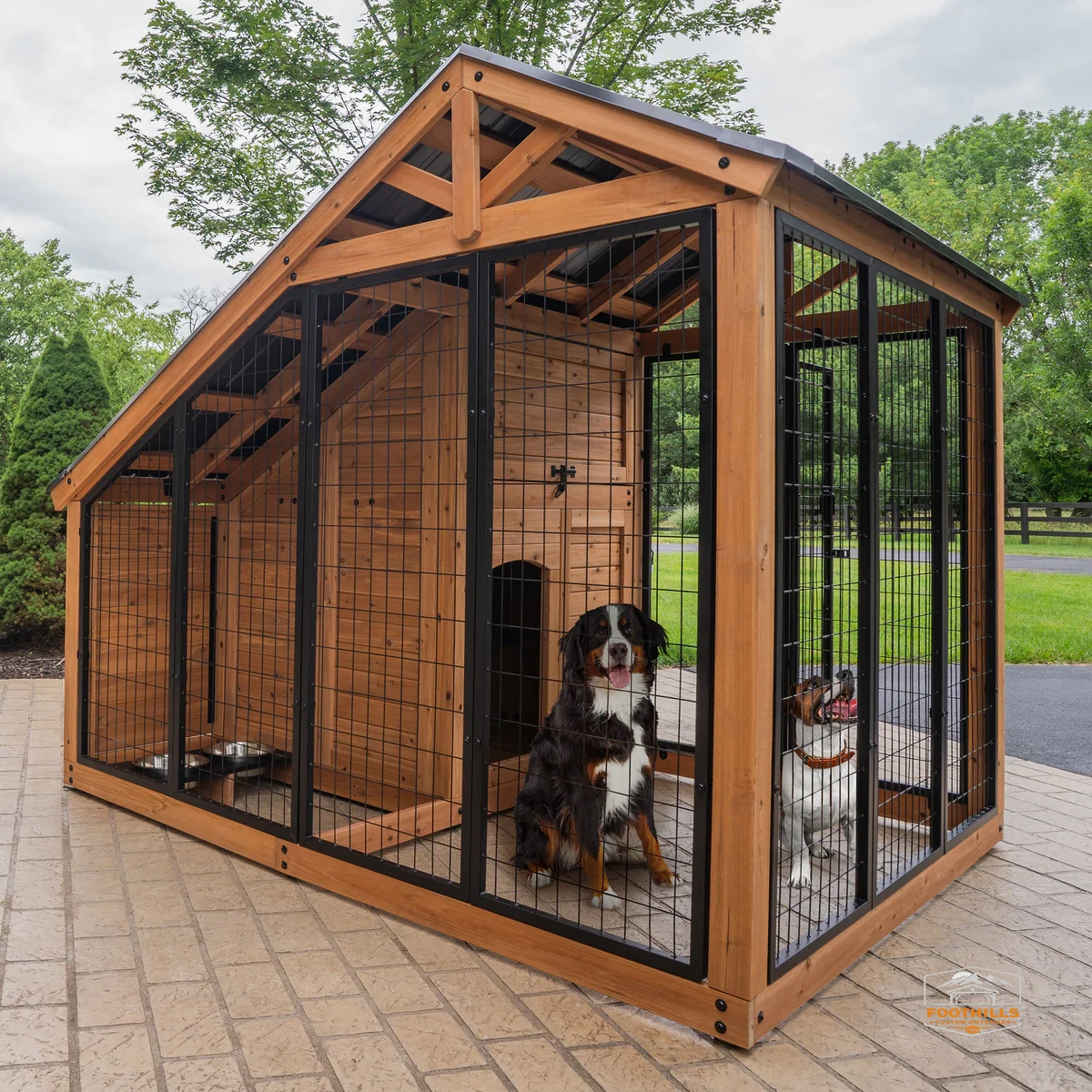
From $1,999
5-Star
Animal Enclosure
A cedar outdoor animal enclosure with a steel roof, a 7-position customizable gate, feeding and rear access doors, built-in storage, and a two-bowl feeding station.
- Weather-Tested & Proven
- 5 Year Warranty
- Professional Installation
- Free Shipping
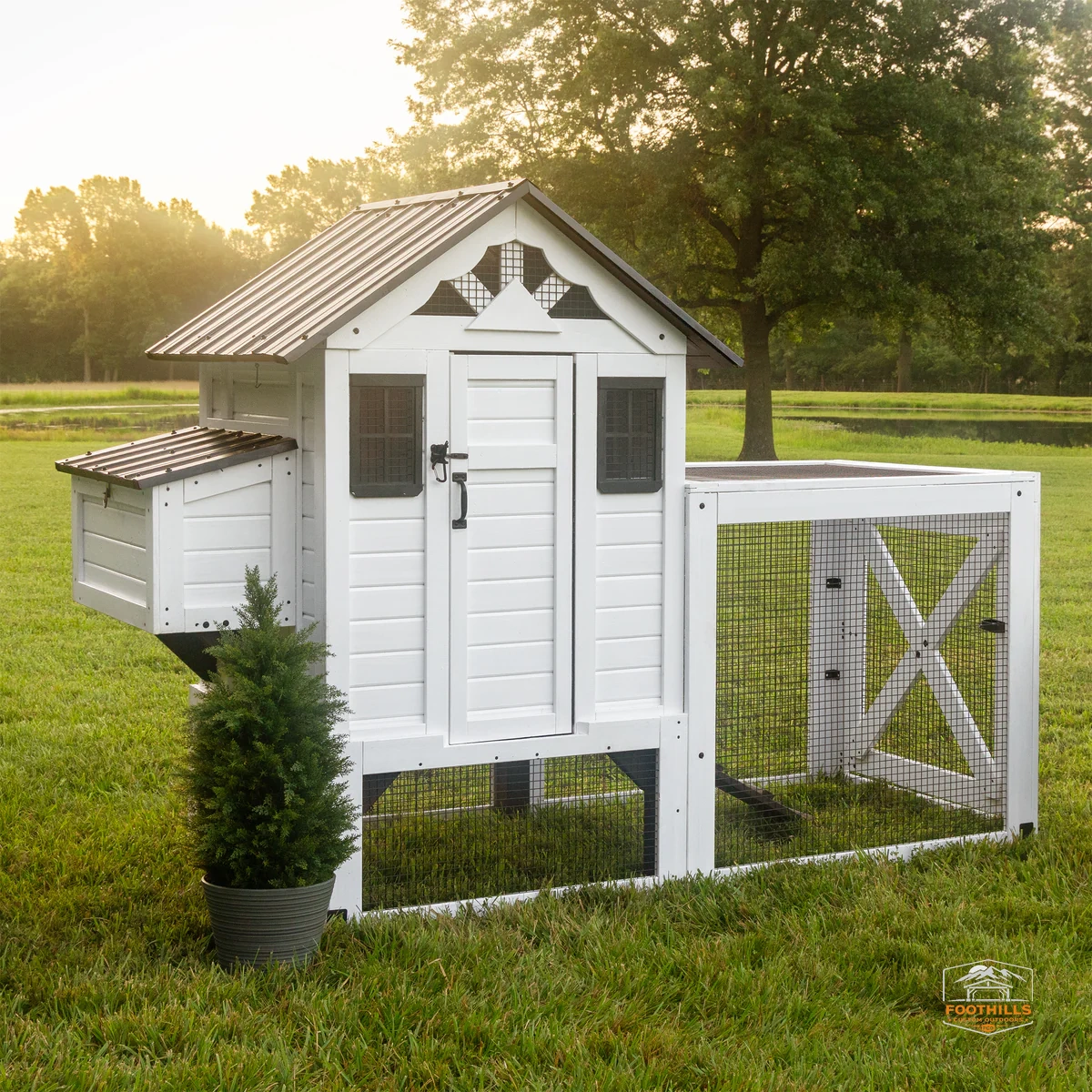
From $1,599
5-Star
Rustic Roots Chicken Coop
A raised cedar chicken coop for up to 6 hens with a 48 sq ft run, a solar-powered automatic door, a four-hole nesting box, three roosting bars, and removable floor pads.
- Weather-Tested & Proven
- 5 Year Warranty
- Professional Installation
- Free Shipping
From $1,199
5-Star
Sweetwater Chicken Coop
An elevated cedar chicken coop for 4 to 6 hens with a 24 sq ft run, a solar-powered automatic door, a two-hole nesting box, roosting bars, and removable rubber floor pads.
- Weather-Tested & Proven
- 5 Year Warranty
- Professional Installation
- Free Shipping
Enclosures by Animal Type: Find the Right Fit
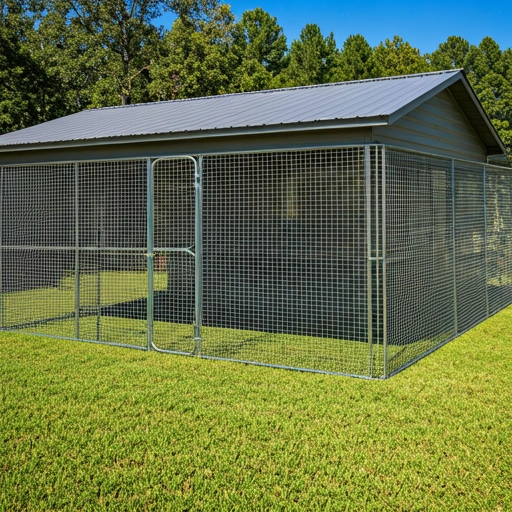
Dog Kennels and Outdoor Runs
A quality outdoor dog kennel gives your dogs room to move, fresh air, and protection from the elements without you worrying about escape or predator threats.
Look for:
- Heavy duty welded wire or chain link panels (not lightweight mesh).
- A covered roof for sun shade, rain protection, and aerial predator defense.
- Secure latching systems that cannot be bumped or nosed open.
- Elevated or gravel flooring to prevent mud buildup in the red clay.
For larger breeds or multi dog households, a custom sized run with reinforced panels is the safest option.
Chicken Coops and Poultry Housing
Backyard chickens are more popular in Knoxville than ever, and for good reason. Fresh eggs, pest control, and the satisfaction of a small homestead right in your backyard.
But chickens are also the most vulnerable animals you can keep outdoors in this region. A proper chicken coop needs:
- Hardware cloth on all openings (not chicken wire; we will explain why below)
- Multi tier design with nesting boxes, roosting bars, and an integrated run
- Predator proof latches that raccoons cannot manipulate
- Elevated flooring to prevent burrowing predators and keep bedding dry
- Adequate ventilation that does not create openings large enough for snakes
Remember: Knoxville allows up to 6 hens within city limits (no roosters) with an annual Urban Livestock Permit. We cover the details in the permits section below.
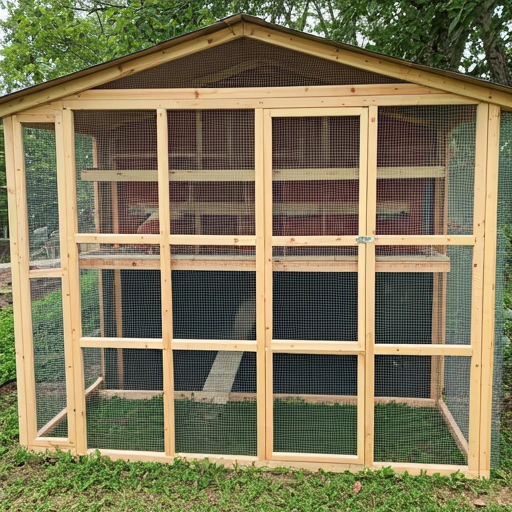
Rabbit Hutches and Small Animal Enclosures
Rabbits, guinea pigs, and other small animals need enclosures that keep them contained, protected from predators, and comfortable in Tennessee’s humidity.
Key features to look for:
- Removable trays for easy cleaning
- Elevated design to keep animals off damp ground
- Solid roofing for weather protection
- Wire mesh small enough to prevent snake entry
Catios: Outdoor Cat Enclosures
Catios are fully enclosed outdoor spaces that let your cats enjoy fresh air, sunshine, and stimulation without the risks of free roaming. They are one of the fastest growing enclosure categories in East Tennessee.
A good catio includes:
- Full mesh coverage on all sides and the top for aerial predator protection
- Multiple climbing platforms and perches
- Access through a cat door or window from your home
- Weather resistant materials that handle humidity and rain
Livestock Shelters and Run In Sheds
For homeowners with goats, miniature horses, or hobby farm animals, a run in shed provides open front shelter that animals can enter and exit freely. These are simple structures, but they still need to be properly sized, anchored, and built with materials that resist rot in Tennessee’s damp climate.
Predator Proofing Your Enclosure: A Non Negotiable in East Tennessee
This section might be the most important thing you read on this page. No matter how beautiful or well built your enclosure is, if it is not predator proof, it is not doing its job.
Hardware Cloth vs. Chicken Wire: Why Standard Wire Is Not Enough
This is the single most common mistake we see homeowners make. Chicken wire keeps chickens in. It does not keep predators out. A raccoon can tear through standard chicken wire with its hands. A determined dog can push through it. A snake can slide right through the gaps.
Hardware cloth (welded wire mesh with 1/2 inch or 1/4 inch openings) is the East Tennessee standard for animal enclosures. It is strong enough to stop raccoons, small enough to block snakes, and durable enough to last for years without sagging or rusting. Every enclosure we install uses hardware cloth on vulnerable openings. No exceptions.
Dig Proof Foundations: Predator Skirts and Buried Wire
Coyotes, foxes, and even raccoons will dig under a fence to reach your animals. Preventing this requires one of two approaches:
- Predator skirt: A horizontal apron of hardware cloth extending 12 to 24 inches outward from the base of the enclosure, buried just below the surface. Animals trying to dig at the fence line hit the wire and cannot get past it.
- Buried wire: Hardware cloth extending straight down 12 to 24 inches into the ground around the perimeter.
In East Tennessee’s red clay, burying wire requires some effort, but it is the single most effective way to stop digging predators.
Secure Roofing: Protection From Hawks, Owls, and Aerial Predators
Red tailed hawks and Great Horned Owls are active throughout Knox County and the surrounding areas. An open top enclosure leaves your chickens, rabbits, and small animals completely exposed.
Options for overhead protection:
- Solid roofing (metal or wood) for full weather and predator protection
- Hardware cloth roofing for airflow and light while still preventing aerial attacks
- Netting as a lighter weight option, though it is less durable than hardware cloth and may need periodic replacement
For the best protection, we recommend solid roofing over living areas and hardware cloth over run areas.
Snake Proofing and Rodent Prevention
Copperheads are a genuine safety concern in East Tennessee, especially in enclosures that attract mice (which attract snakes looking for a meal).
To minimize snake risk:
- Use 1/4 inch hardware cloth at the base of the enclosure (snakes cannot fit through openings this small)
- Store feed in sealed, rodent proof containers
- Keep the area around the enclosure clear of brush, rock piles, and debris where snakes hide
- Elevate feed and water stations off the ground
Climate Ready Materials for Tennessee's Humidity and Storms
Rot Resistant Wood
Standard pine will rot quickly. We use Western Red Cedar (naturally rot and insect resistant) or ECOFLEX wood/plastic composite which is moisture proof and virtually maintenance free. We avoid pressure treated lumber unless rated pet safe.
Ventilation Without Exposure
Tennessee summers are hot and humid. We provide cross ventilation using openings on opposing sides, covered with hardware cloth and overhanging eaves to keep rain out while letting air circulate.
Winter Ready Shelters: Meeting Laws
Tennessee law now requires outdoor animal shelters to be:
- Enclosed on all sides with a roof
- Elevated off the ground
- Large enough to stand, turn, and lie down
- Supplied with appropriate bedding in winter
Our structures meet or exceed these requirements.
Predator Proofing Your Enclosure: A Non Negotiable in East Tennessee
If your property has red clay (and most do in this area), you know what happens after a heavy rain: mud. Thick, sticky, ankle deep mud. An animal enclosure sitting directly on red clay soil will become a mud pit after the first good storm. Here is how we prevent that:
Pea Gravel Base
Provides drainage and keeps animals off wet ground. Easy to clean and replace.
Elevated Flooring
Prevents ground moisture from wicking into bedding and creates airflow underneath.
French Drains
For larger enclosures on slopes, we redirect water away from the structure.
Expert Leveling
Timber frame platforms or adjustable post heights keep the enclosure stable on sloped lots.
Professional Animal Enclosure Installation by Foothills Custom Outdoors
Site Evaluation
Property walkthrough to assess terrain and predator risks.
Risk Assessment
Recommend hardware cloth gauge, wire depth, and latch style.
Structure Selection
Choose the right enclosure for animals, space, and budget.
Site Preparation
Grading, drainage, and leveling for a stable foundation.
Installation
Assembly, predator proofing, and secure anchoring.
Security Check
Walk around inspection to ensure no gaps or weak points.
Serving Knox County, Maryville, Seymour, and Surrounding Areas
We install animal enclosures throughout the greater Knoxville area, including more rural communities where predator pressure is highest. Building a truly predator proof enclosure takes precision. The wire has to be the right gauge and the right size. The foundation has to prevent digging. The latches have to be raccoon proof. Let our team handle the details so your animals are safe from the start.
Enclosures by Animal Type: Find the Right Fit
Backyard Chickens
- Up to 6 hens allowed (No Roosters)
- Urban Livestock Permit: $25 annually
- Required coop inspection
- Strict setback requirements
HOA Rules
Farragut, Hardin Valley, and Bearden often have rules regarding:
- Maximum size and height
- Required earth tone colors
- Visibility from street
- Permanent outbuilding’ classification
Exotic Animal Permits
Knoxville requires separate permits for large reptiles and pot bellied pigs. Check with animal services before building.
Grill Gazebo and Bar FAQ
How much does an animal enclosure cost?
It depends on the type, size, and level of predator proofing. A basic rabbit hutch is a very different investment than a large, fully predator proofed chicken run. Contact us for a recommendation based on your specific animals and property.
What is the most important feature for predator proofing?
Hardware cloth. It is the single most effective material for keeping predators out. Standard chicken wire is not strong enough for East Tennessee wildlife.
How often do I need to clean the enclosure?
This varies by animal. Chicken coops should be cleaned weekly, with a full deep clean monthly. Dog runs and catios need regular waste removal. Rabbit hutches with removable trays can be cleaned daily with minimal effort.
Can I keep chickens in a Farragut neighborhood?
It depends entirely on your HOA. Knoxville city law allows it with a permit, but your neighborhood association may have additional restrictions. Always check before building.
How do I keep the enclosure from becoming a mud pit?
A pea gravel base, elevated flooring, and proper drainage planning solve the mud problem. We address this during every installation.
Keep Your Animals Safe: Contact Foothills Custom Outdoors
Your animals depend on you to keep them safe, dry, and comfortable. Whether you need a chicken coop that passes city inspection, a dog run that handles Tennessee storms, or a catio that keeps hawks and snakes out, we will help you build it right.
Reach out to Nick and Sam. We will visit your property, assess your needs, and install an enclosure that gives you peace of mind year round.